





0% balance transfer & purchase cards
Get 25 months at 0% on purchases & 23 months at 0% on balance transfers with one card

Most credit cards are good for new spending OR balance transfers, but some offer cheap intro rates on both. We've full info and our top picks, plus our eligibility calculator will show the cards you have the best odds of getting before you apply.

First, a quick overview of 0% all-rounder cards...
All-rounder credit cards offer interest-free periods for both balance transfers and purchases – so existing card debt is shifted to 0% interest, allowing you to repay your debt more quickly, plus all spending is at 0% too. These cards are best for those who've existing credit card debt and an essential, planned, one-off purchase to make.
Don't just apply - go via an eligibility calc. Our 0% All-Rounder Eligibility Checker speedily shows acceptance odds for top cards (some are 'pre-approved'), without affecting your creditworthiness.
Go for the LONGEST 0% periods. Choose 0% balance transfer and spending periods long enough to repay any debts you plan to transfer and to cover any planned, essential spending you need the card for. If you've choice, go for the lowest transfer fee within a 0% time long enough to clear the debt.
Some cards are 'UP TO', which means some get a WORSE 0% deal. Thankfully, for most cards, our eligibility calculator will tell you IN ADVANCE the 0% deal you'll get.
Top-pick 0% all rounder cardsNew. Lloyds Bank
Longest card in our eligibility calc, but it's an 'up to'- Spending: Up to 25 months 0%
- Transfers: Up to 23 months 0% (2.99% fee)
- 24.9% rep APR after 0%Tesco Bank
Longest DEFINITE card- Spending: DEFINITE 21 months 0%
- Transfers: DEFINITE 21 months 0% (2.95% fee)
- 24.9% rep APR after 0%TSB (1)
Longest 0% spending period, not in our eligibility calc- Spending: Up to 26 months 0%
- Transfers: Up to 18 months 0% (3.49% fee)
- 24.9% rep APR after 0%(1) TSB is only available direct, the link takes you to its site where you can check your eligibility before applying).
If you do get a card, ALWAYS follow the All Rounders Golden Rules:
a) Never miss the minimum monthly repayment, or you could lose the 0% deal.
b) Clear the card before the 0% ends, or the rate rockets to the higher APR.
c) To avoid hefty fees and interest, don't withdraw cash.
d) If you don't transfer at application, you've usually only 60-90 days to get 0% deal.
e) Watch out for different 0% lengths for spending and transfers.
f) You can't transfer debt between the same bank or banking group.
Now that we've given you a brief overview and you understand the basics, let's take you through all-round credit cards in more detail...
What is a 0% all-rounder credit card?

Most 0% credit cards are good for new spending OR cutting the cost of existing debt, but an all-rounder card offers 0% intro rates for a number of months on both.
You can usually get a longer interest-free period with a dedicated balance transfer credit card, though if you have a need to borrow further (for example, a planned, affordable, one-off purchase, such as replacing a broken fridge) then an all-rounder card offers one fewer application hitting your credit file, protecting your creditworthiness.
Should I use these cards for spending, balance transfers or both?
As we say above, you can usually get a 'better' balance-transfer only 0% card, so these are best used either only for new spending (a lot of the cards in this guide also feature in the top 0% spending cards top picks), or if you need to both transfer a balance and spread the cost of new borrowing.
If you do need to borrow, ensure it's planned, budgeted for and affordable. If so, a card with a 0% spending period on new borrowing is one of the cheapest ways to borrow.
The six golden rules of 'all-rounder' credit cards
Before applying for a 0% balance transfer & spending card, ensure you read the five golden rules.
1. Repay AT LEAST the monthly minimum or you may lose the 0% rate – the easiest way is to just set up a Direct Debit
You MUST make minimum repayments each month – even while you’re paying no interest. If you miss even one repayment, you'll usually lose the 0% deal AND be charged expensive interest.
But your aim should be to repay more than the minimum – unless you've expensive debts elsewhere, in which case focus maximum repayments on them. Minimum repayments are designed to make debts last as long as possible, which you should try to avoid – see our Credit Card Minimum Repayment Calculator for tips to beat this.
2. Keep your borrowing interest-free. Clear debt or shift again before the 0% or cheap rate ends, or costs rocket
These cards are designed to make lenders money when you don't pay them off within the 0% period. At that point, the interest rate jumps massively, to around 25% APR.
Always aim to pay off the transferred balance within the 0% period to avoid paying interest. If that's not possible, transfer again to another 0% or low interest card before your current 0% deal ends.
3. Don't withdraw cash – it's usually at an expensive rate
While balance transfers and purchases on these cards are interest-free for a number of months, cash withdrawals are not – interest is usually charged from the date of making the cash withdrawal until it's paid off.
4. To get the 0% and advertised fee, you usually have to do the balance transfer within the first 60 to 90 days
For most cards, you only get the 0% period if you make the balance transfer in the first 60 or 90 days – though it does vary. Any transfers after this would incur expensive interest at the card's standard rate (unless paid off IN FULL) and you may also pay a higher one-off transfer fee.
There are some exceptions though. Some cards require you to request the balance transfer when you apply, and others allow transfers at any point during the 0% period. But as the 0% period usually starts on the day you open the account, you'd have less interest-free time if you waited.
5. Watch out for cards with two different 0% lengths
Certain cards have, for example, 21 months 0% on spending and 18 months 0% on transfers. In this case, after 18 months you'd start paying interest on any amount left that you'd transferred. It's therefore best to clear the card by the shortest 0% period, so you don't get caught out.
However, if you can't, any repayments you make has to go towards paying off the most expensive debt first, so this will at least clear first.
6. You can't balance-transfer between two cards from the same bank or often the same banking group
If you have a credit card with HSBC, for example. you won't be able to transfer a card balance to another HSBC card OR a First Direct or M&S bank card.
Some notable groups include:
-
NatWest, RBS and Ulster Bank
-
HSBC, First Direct and M&S Bank
-
Santander and Cahoot
-
Virgin Money, Nationwide, Clydesdale Bank, Virgin Atlantic, and Yorkshire Bank.
-
Capital One, Littlewoods, Luma, Ocean, Post Office, Thinkmoney and Very
-
Newday, Amazon, Argos, Aqua, Fluid, John Lewis, Marbles, Opus. You're also unable to transfer a balance from a store card or American Express.
This is not an exhaustive list – it's always best to check that the new card will accept a transfer from your current card before applying if you're not sure.
Try our free Credit Club
Sign up to MSE's Credit Club to boost your credit power – access our free tools to see how the financial world views you, including:
An Eligibility Rating that combines your credit score, affordability, and market trends.
View your full credit report – your financial CV.
Get personalised acceptance odds for credit cards and loans.
Top 0% 'all-rounder' cards
You'll pay a one-off fee for transferring a balance, so it's best to go for the card with the lowest fee in the time you're sure you can repay it. If unsure, play safe and go long.
Some cards are 'UP TO', which means some get a WORSE 0% deal. Thankfully, for most cards, our eligibility calculator will tell you IN ADVANCE the 0% length you'll get. If it's the top deal, these cards beat the longest DEFINITE 0% cards, so they're winners.
It'll give you a personalised best-buy table, so you can hone in on the cards you're most likely to be accepted for. It will also show if you’re pre-approved for any cards (ie, you'll definitely be accepted), plus for some cards it'll show you what credit limit you'll get.
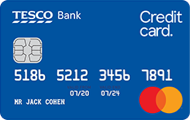
Long, DEFINITE 0%. All accepted get the full 21mths at 0% on both spending and transfers (2.95% fee), which makes it the longest definite card for spending and transfers. A winner if you've got low acceptance odds for the 'up to' cards below.
All accepted get:
21mths 0% on spending & balance transfers (2.95% fee)


Long 0% periods for both spending & transfers. The headline deal is a solid combination of long 0% spending and transfer periods. Backup deals vary, but our eligibility calculator will show what you'll get in advance, so you have certainty before you apply.
Headline deal:
25mths 0% on spending & 23mths 0% on transfers (2.99% fee)
Backup rates
Ranging from 24mths on spending & 22mths on transfers (3.25% fee) down to 12mths on spending & 10mths on transfers (3.99% fee) with other rates between
NatWest
24.9% rep APR after
Long 0% periods for both spending & transfers. The headline deal is 23mths 0% on spending and 21mths 0% on transfers (3.49% fee). The backup rate could be as short as 12 months. Use our eligibility calc to see what 0% periods you'll get before you apply.
Headline deal:
23mths 0% on spending & 21mths 0% on transfers (3.49% fee)
Backup rates
12-22mths 0% on spending & 12-20mths 0% on transfers( 3.49% fee)
Long 0% period on spending plus possible £25 cashback. The headline deal is a long 24mths 0% on spending though only a decent 17mths 0% on transfers (3.49% fee). However, there's a possible £25 cashback available. Apply by 10 Aug and spend or transfer £500+ within 60 days of opening the account to get £25 cashback credited to the account within 90 days of meeting the criteria. Note: you won't qualify if you already hold a HSBC Balance Transfer, Purchase, Classic or Student Card or have opened a HSBC credit card within the last 12 months.
Headline deal:
24mths 0% on spending & 17mths 0% on transfers (3.49% fee)
Backup rates
15mths 0% on both spending & transfers (3.49% fee)
TSB
24.9% rep APR after
Longest 0% for spending & decent 0% for transfers, but an 'up to'. This is the market's longest 0% spending deal at 26mths, plus a decent 18mths at 0% on transfers. But some will shorter backup deals. TSB's eligibility tool will tell you the 0% periods you'll get before you apply. If it's not the headline deal, use our eligibility calc to find another card.
Headline deal:
26mths 0% on spending & 18mths 0% on transfers (3.49% fee)
Backup rates
22mths 0% on spending & 15mths on transfers OR 19mths 0% on spending & 12mths on transfers (3.49% fee)
Cashback sites may pay you for signing up
As an extra boon, members of specialist cashback websites can be paid when they sign up to some financial products. Do check it's exactly the same deal though, as terms can be different. And remember that cashback is never 100% guaranteed until it's in your account.
There's full help to take advantage of this and pros and cons in our Top Cashback Sites guide.
0% 'all-rounder' cards FAQs
How do I compare 0% all-rounder cards to work out which is best for me?
The key things to check are:
-
0% purchase period – how long you can spend interest-free.
-
0% balance transfer period – how long existing debt is at 0%.
-
Balance transfer fee – usually 0%–4% of the debt moved.
-
Rep APR – the rate you’ll pay once the 0% deal ends (often 23%–25%).
Pick a card with a long enough 0% period to clear your debt. All credit cards come with standard protection if things go wrong.
Why did it reject me? I've got a great credit score!
It’s not just about your score – lenders want customers they think will be profitable. If they decide you can’t afford the card, or you don’t fit their business goals, they may say no. Sometimes it’s as random as preferring applicants who might later take out a mortgage. Always check your credit file for errors, but don’t expect clear reasons. For deeper insight, try our free Credit Club.
Will using a 0% balance transfer and purchase credit card hurt my credit score?
This all depends on how you use the card. If you never miss a repayment and stay within your credit limit you can actually improve your creditworthiness. Mismanaging a credit card can be costly and harm your rating.
Applications involve a hard credit check, which leaves a mark on your file – repeated rejections can lower your chances next time.
Use our eligibility calculator first for a soft check that won’t affect your score. If you’ve old cards gathering dust, see our guide on how to cancel a credit card.
Does a lower interest rate mean I pay less each month?
No – credit cards don’t work like loans. You choose how much to repay (at least the set minimum each month). The interest rate is simply the cost of debt – eg, 20% on £1,000 is £200 a year if the balance stays the same.
Always check a card’s minimum repayment before switching, as it could be higher than what you pay now. Aim to repay more than the minimum – it clears debt faster and costs you far less. See our Credit Card Minimum Repayment Calculator for full help.
What if the credit limit I get isn't high enough?
Don't worry – you can still use the card for part of the amount you want to spend or transfer. Use as much of the limit as you can, then consider applying for another suitable card or finding an alternative way to cover the rest. Just be careful not to make multiple credit applications in quick succession, as that can affect your chances of being accepted.
See How much credit limit should I have? and High credit limit cards for more.
I already have a lot of debt. Will this help me?
It could, but you'll need to be disciplined. These 'all-rounder' 0% cards can be used to balance-transfer existing card debts, giving you time to pay off the debt more slowly, and at 0%. But as there's a 0% spending period too, it could actually tempt you in to further debt – so it might be better not to take the risk.
It may be better to look at more serious ways to cut costs and sort out your debts. See our Money Makeover guide for how to cut costs on everyday expenses, or Debt Help for where to find help and advice.
What is an APR?
APR stands for annual percentage rate – this represents the annual cost of borrowing on a credit card. It includes the cost of the borrowing (or the 'purchase rate' – the amount of interest you pay on any outstanding balance), plus any monthly or annual fees if applicable.
An APR is therefore meant to give you the overall equivalent cost of a debt, which you can then use to compare against other credit and loan products. It must be displayed by a lender before any agreement is signed.
A representative APR means at least 51% of customers will get that rate or lower. The rate you actually get depends on your credit history, so you could get a different interest rate to the one advertised.
How do repayments work when I've more than one debt?
Credit card firms must put your repayments towards the most expensive debt first. Let's say you have a credit card with a £500 debt from purchases at 0% APR, and a £500 debt from a balance transfer at 24.9% APR. If you repaid £600, £500 would be allocated to the balance transfer debt, with the remaining £100 going towards the debt from purchases.
But with all-rounder credit cards, where borrowing via a balance transfer or spending is at the same 0% interest, it’s up to the credit card provider as to how they allocate repayments. While most will put repayments towards overdue payments and late fees first, each operates slightly differently.
For example, some will prioritise the oldest debt, some the largest debt, and some the debt with the soonest ending 0% period. Others may go in a set order such as money transfers, then balance transfers, then card purchases. The exact breakdown can be found on your statement or the card's summary box.
Of course, it doesn't matter which order debts are addressed if you can afford to pay off your card in full each month, or if you have an all-rounder card with equal 0% periods.
Other MSE credit card guides... Find the right credit card | 0% money transfer cards | 0% credit cards for spending | Balance transfer credit cards | What is a balance transfer credit card? | Debt help | How credit cards work | Reward credit cards | Student credit cards | How to pay off credit card debt more quickly | Prepaid cards
Why can you trust MoneySavingExpert?
MoneySavingExpert.com is the UK’s biggest consumer finance website, founded by Martin Lewis, offering impartial, research-based tips.
The site's dedicated to cutting your bills and fighting your corner with journalistic research, cutting-edge tools and a massive community – all focused on finding deals, saving cash and campaigning for financial justice.
Share this guide?