


Backpacker travel insurance
Get cheap backpacker travel insurance for long travelling stints

Every year thousands of people of all ages plan gap-year and other worldwide backpacking jaunts. If that's you, it's vital to get specialist travel insurance – often called backpacker insurance – as soon as you book, so you're covered if the worst happens.
First, a quick overview of backpacker insurance...

🧳 What it is: Specialist travel insurance that covers you for longer trips of up to 18 months. Standard policies generally cap cover at 60 consecutive days.
✅ Why you need it: Covers medical costs, cancellations, lost luggage & more – before and during your trip.
🕒 Buy ASAB: Get cover As Soon As You Book (ASAB) to cover cancellation and pre-trip illness.
🩺 Declare everything: Always list pre-existing medical conditions.
🌍 Check destinations: Some policies exclude certain countries, so always check.
💰 Don’t overpay: Platinum policies with £10m of medical cover are unnecessary.
🧗 Add-ons: You may need extras, such as extreme sports cover or cruise cover.
🔍 How to find a deal: See our top-picks for cheap backpacker insurance.
Now that we've given you a brief overview and you understand the basics, let's take you through backpacker insurance in more detail...
What is backpacker travel insurance?
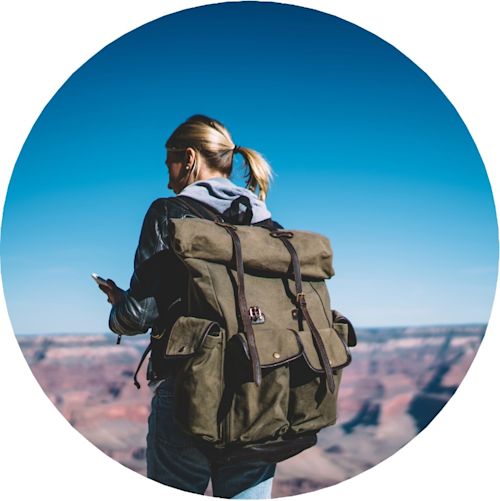
Whether you're travelling with a rugged backpack or sporting a posh suitcase, standard travel insurance is unlikely to cover you if you're going away for more than 60 consecutive days. You'll therefore need specialist backpacker insurance – sometimes called 'gap year travel insurance' or just simply 'backpacker' insurance.
These policies are specially created to protect you for up to 18 months as standard when travelling. In short, a backpacker travel insurance policy will insure you for as long as you're away – and usually also let you temporarily return to the UK to visit friends or family, or deal with an emergency.
Many annual travel insurance policies limit cover to 30 or 31 days before you have to return home. However, there are policies that do extend insurance to 60 days, but for the majority of backpackers that won't nearly be enough.
Going away for fewer than 60 days? Have a look at the best standard travel insurance policies.
Why do you need backpacker travel insurance?

"Why should I get backpacker insurance? I probably won't use it," you may ask. But the whole point of insurance is to cover you for the unforeseen, unpredictable events that may occur before or during your trip.
Of all life experiences where you might deliberately think about getting insurance, a gap year is one. Backpacking is all about visiting exotic locations and putting yourself through unusual experiences.
While it might not be all white-water rafting and trekking in the Hindu Kush, you'll most likely be doing plenty of pastimes out of the ordinary which will expose you to risk. You need to accept that, and as it's impossible to predict the future, all you can do is give it your best shot. To sum up...
Insurance is about making unpredictable events predictable in case the unpredictable happens.
Backpacker travel insurance need-to-knows
Buy as soon as you've booked to cover cancellation and pre-trip illness
If you've booked a backpacking expedition and have left getting insurance way down at the bottom of your 'to do' list, you're taking an unnecessary risk.
Thinking you don't need to arrange cover yet as your adventure doesn't start for another six months is a big mistake. In fact, it's even more reason to arrange backpacker insurance, as anything can happen before your trip even starts.
Why? Because backpacker insurance won't just cover you while you're away, it also covers you for cancellation, or anything else that might go wrong, BEFORE you make your trip. Always buy travel insurance ASAB – as soon as you've booked.
If you haven't done this, however, then fear not – you still have options.
Declare pre-existing conditions

The thought of having to declare medical conditions can be daunting, but travelling without letting your insurer know about any issues can result in claims being rejected. Make sure you give a full and frank rundown of all your relevant health issues to your policy.
Pricing radically changes depending on who you are, so it's important to disclose everything. That said, insurers won't be able to unfairly reject a claim if you've given wrong information about a part of your policy that is irrelevant to the claim.
Remember, if your circumstances change during the time you hold a policy, or you become ill, let your insurer know. For more, see our Pre-existing medical conditions travel insurance guide.
You'll need specialist cover
If you've got a serious condition, you'll need specialist cover. Websites to try include Medical Travel Compared*, All Clear Travel, Staysure*, Avanti* and MIA Online. Please note, these sites are also independent of MoneySavingExpert and may include providers we wouldn’t. See FAQs below.
If you're still unable to find cover, speak to a specialist broker who should be able to help. Try the British Insurance Brokers' Association broker helpline.
Still can't find affordable cover? The price may drop considerably if you ask insurers to exclude some, or all, of your pre-existing conditions. Overall, it's a judgement call on the risks of travelling with limited cover.
Check for 24/7 emergency assistance
Many backpacker insurance policies come with 24/7 emergency assistance. This gives policyholders a dedicated phone number or email address they can contact all day, every day to get the help they need.
This can be a literal lifesaver when travelling – namely during medical emergencies, although 24/7 assistance can come in handy for other reasons too. Services typically offered as part of this include:
-
Locating and obtaining medical care
-
Making emergency travel arrangements
-
Providing access to legal assistance
-
Replacing lost or stolen travel documents
-
Advancing cash or guaranteeing payment to a medical provider
-
Translation services
As such, it's well worth finding a backpack travel insurance policy that includes 24/7 emergency assistance, particularly if you're venturing to remote areas where finding help may be more difficult.
Don't overpay on your insurance – costlier cover is rarely worth it
Insurance firms go all out to scare us into upping cover levels, so don't be duped into upgrading for no reason. Platinum policies with £10m worth of medical cover are unnecessary.
"Why," you ask? Well, you're charged more but the chances of you making a claim that high are slim. According to the Association of British Insurers, the average cost of a medical travel insurance claim in 2024 was £1,724 – a far cry from £10m.
Double-check you're covered for the USA, Canada, the Caribbean and Spain
Be mindful that some worldwide policies don't cover the USA, Canada and the Caribbean. A few annual European travel insurance policies don't cover Spain, including the Spanish islands.
So if you're going to any of those countries, ensure your policy actually covers you while there.
What backpacker travel insurance typically covers
There are a number of different things backpacker insurance does and doesn't cover usually cover – plus add-ons you can get.
What you CAN claim for | What you CAN'T claim for |
|---|---|
Medical expenses. If you become ill or suffer an injury overseas and need treatment. Travelling in Europe? Read more about the Global Health Insurance Card (GHIC) and European Health Insurance Card (EHIC). | Claims from a country with a Foreign Office travel warning. Your insurer is unlikely to pay out if you've travelled to somewhere that the Foreign, Commonwealth & Development Office advises against visiting. |
Emergency repatriation. The cost of transportation back home after an illness, injury or death. | Undeclared pre-existing medical conditions. Not declaring existing medical conditions will void your cover and make you unable to claim. |
Flight and travel delays. Protection if your travel plans are interrupted. | Treatment because of being unvaccinated. If you come down with a tropical disease and need medical treatment but didn't get the recommended vaccinations or inoculations beforehand, you won't be covered. |
Delayed or lost luggage. If your luggage is delayed or lost for more than a certain period of time. | Illegal or reckless acts. Claims stemming from reckless or illegal acts won't be accepted. |
Theft, loss or damage. Do note there are usually limits on what insurers will pay out for. | Claims after being under the influence. A drink or two is probably fine, but any claims made because of excessive alcohol probably won't be accepted by your insurer. |
Personal liability. If you accidentally injure somebody or damage their property (excluding incidents involving a motor vehicle). | Winter and extreme sports. Although some activities will likely be covered, riskier ones – such as winter and extreme sports – may not be. You might be able to get protection via an add-on however. |
Cancellation or curtailment. Unlike standard travel policies, some backpacker insurance even covers failure to pass university exams as a reason for cancellation. | Missed flights. Although backpacker insurance covers you for missed flights in certain circumstances, simply missing one because you were late, for example, won't cut it. |
Accidents while undertaking casual work abroad. Some backpacker insurance pay out because of an incident during certain types of paid or unpaid work abroad. | Unattended possessions. You can't be completely careless with your stuff. If you leave items unattended and they're stolen, your claim is likely to be rejected. |
Typical backpacker travel insurance add-ons
As well as standard coverage, you may be able to get the following extras on your backpacker travel insurance policy:
-
Trip disruption cover. For example, if unforeseen circumstances such as a natural catastrophe or a global pandemic disrupt your trip.
-
Trip extensions. Want to keep travelling? Some insurers will let you add extra time to your backpacker travel insurance policy.
-
Gadget cover. If you've got particularly valuable gadgets such as your smartphone, tablet, laptop or camera, you may want a dedicated gadget add-on but make sure you understand the claims process carefully. It is common for repaired or replaced devices to be sent to your UK address, and not where you're travelling.
-
Extreme sports cover. For example, if you're going skiing, quad biking, bungee jumping, kayaking or white-water rafting.
-
Cruise cover. This can cover you for cruise-specific issues such as missing your boat or being confined to your cabin because of illness. Some cruise operators may require you to have this. More cruise insurance info in our dedicated guide.
-
Excess waiver. An excess waiver add-on is a good idea if you're concerned that the excess cost will put you off making smaller claims. Check your policy closely though, as an excess might still apply in certain circumstances.
-
Volunteering cover. You might need a dedicated volunteer travel add-on if you're planning on doing any volunteering work while abroad.
Best travel insurance for backpackers
Before you buy a backpacker travel insurance policy, closely consider what coverage you need. Take into account factors such as your trip duration and your destinations. Then compare as many policies as possible to find the best backpacker insurance policy for your needs and budget.
These are our cheapest top-pick backpacker travel insurance policies:
-
Staying in Europe? A year's cover from £133, or less for a shorter travel period.
-
Travelling the world? From £450 for a year's cover, or select the option to a shorter travel period.
-
For a wider choice ... try a comparison site.
Cheap travel insurance for backpackers only visiting Europe
These are the cheapest regulated policies we've found for individuals travelling within Europe that meet our . We've judged them purely on price, and NOT on customer feedback. The prices are based on an 18-year-old, so your price will likely be a little different, but it should be a good indicator of the cheapest insurers.
All of these insurers cover backpackers aged up to at least 40, but if you're older, check the insurers maximum age limit, as it varies. All have a medical limit of at least £5 million.
Gadget cover is usually an optional extra, but check your home insurance first as you may already be covered.
Provider | Premium (1) | Cancellation limit | Baggage limit | Excess |
|---|---|---|---|---|
Insurewithease.com (Backpacker Plus)* | £133.05 | £2,000 | £1,000 | £70 |
Outbacker Travel Insurance (Silver)* | £235.25 | £2,000 | £1,500 | £95 |
World First Travel Insurance (Silver) | £243.89 | £2,000 | £1,000 | £50 |
InsureFor.com (Premier)* | £320.93 | £3,000 | £1,500 | £50 |
Tesco (Premier) | £351.07 | £10,000 | £3,000 | £0 |
Prices correct June 2025
(1) Based on an 18-year-old travelling for a 12-month trip.
Cheap travel insurance for backpackers going worldwide
If you are travelling further afield, these are the cheapest regulated worldwide policies that meet our . Again, we've judged them purely on price, and NOT on customer feedback. And the prices are based on an 18-year-old, so your price will likely be a little different, though it should be a good indicator of the insurers to try first.
All of these insurers cover backpackers aged up to at least 45, but if you're older, check with the insurer. All have a medical limit of at least £5 million.
Provider | Premium (1) | Cancellation limit | Baggage limit | Excess |
|---|---|---|---|---|
Insurewithease.com (Backpacker Plus)* | £449.62 | £2,000 | £1,000 | £70 |
World First Travel Insurance (Silver) | £513.37 | £2,000 | £1,000 | £50 |
InsureFor.com (Premier)* | £534.44 | £3,000 | £1,500 | £50 |
Prices correct June 2025
(1) Based on an 18-year-old travelling for a 12-month trip.
Want more options? For a wider choice of insurers, try using comparison sites
If our selection of insurers doesn't provide the cover you're looking for, it's worth doing a full check using comparison sites. Try MoneySupermarket*, Compare The Market, Confused.com*, Gocompare and Quotezone*.
You will be able to adjust your quote to suit your needs, for example, if you need to add winter sports cover.
Important. These sites are independent of MSE and may include providers we wouldn't.
Aged 66 or over? How to find cover
It is also worth knowing that cover for anyone who is 66 or over may be very difficult to find, so if that's you, try a broker who may be able to get you a specialist deal. You can find a broker via the British Insurance Brokers' Association. Be aware that these sites are independent of MSE and may include providers we wouldn't.
Run through your backpacking checklist
Like a boy scout, a backpacker should always be prepared, so here's a list of other things that can be done or checked in advance of travel.
✅ Sort those visas out
Many countries require visas for entry, others for work. Some are a mere stamp at the border, while others will take days or weeks to process. Do your homework and work out visa arrangements long before leaving home.
British citizens are thankfully welcomed into dozens of countries without needing a visa. However, it's often the case that, even where it says 'no visa' is needed, you'll usually need:
-
A passport with at least six months left to run on it (when you arrive)
-
Proof of enough cash to live/travel
-
Proof of further flights
-
Documents showing a next destination on your trip
Try Visa Central or VisaHQ for a guide to how many days you can stay for and whether a tourist visa is easily available. They're only a guide, though: for precise details, you'll need to visit each country's own government information websites.
✅ Book a date with the needle
Get advice from your GP practice about which vaccinations are necessary for your destinations. Some vaccines are given over weeks, while others might leave you feeling too unwell to travel for a few days. So for those ones, give yourself time to recover before you leave.
It's also a good idea to check if you'll be travelling to any malaria hotspots and seek anti-malarial tablets from your GP if required.
You'll find plenty of top tips on the NHS website – it gives advice on the types of vaccination, how to get them, side effects and details of those which are free on the NHS.
✅ Organise your cash and cards
It's a good idea to have some local currency ready when you arrive in a new country – especially in your first port of call. Use our TravelMoneyMax comparison tool to get the best rates before you jet off, and 15 of our cheapest tips and tricks to boost your spending power. Have a look about for a good rate of exchange and convert enough cash to see you through your first few days.
To keep the rest of your travel money as safe as possible, a mix of cash, prepaid cards and credit cards is a good idea.
Depending on where you're going to be spending large chunks of your time, certain cards for overseas spending will suit you better than others. Don't forget to split your money between cards and keep these in a hidden money belt on you at all times.
✅ Make copies of your paperwork and write down emergency numbers
Make sure your travel insurance policy – as well as all other travel documents, including a photocopy of your passport – are printed out and kept on you.
It'll also be worth doing the same for relevant phone numbers to save having to look for them in an emergency – such as your destination's British Embassy, local emergency service numbers and 24-hour helplines provided by some travel insurers. It'll be a lot of admin work but could be a lifesaver if you end up in a tight spot.
✅Get familiar with the Travel Aware campaign
The Foreign, Commonwealth & Development Office (FCDO)'s Travel Aware campaign is aimed at helping backpackers be better ready for travelling to different countries. It's jammed with travel tips and loads of tailored country advice, including safety info, travel advice and links to the FCDO on social media.
Getting familiar with the campaign can make you even better prepared for your adventure.
How to make a claim on your backpacker insurance

Claiming on your travel insurance shouldn't be daunting and – if you understand the terms and excesses on your policy – you shouldn't be in for any nasty shocks. Follow the five steps below in the event you need to claim.
1. Submit your claim as soon as possible
Contact your insurer as soon as you can. Some parts of your policy may have a short window to submit a claim and it may take a while to be processed.
2. If it's a medical claim, get an insurer to accept it first
If you need medical attention – and it's not an emergency – get an insurer to accept the claim first. This ensures you aren't faced with a bill after treatment if your claim is eventually rejected. For obvious reasons, don't delay treatment if it's an emergency.
3. If it's a theft or loss claim, notify the police
If something goes missing or is stolen when you're abroad, you may need to get a crime reference number or the overseas equivalent to make a successful claim. Report the incident to the police as soon as you can – you often have to do it within 24 hours – to make sure your claim doesn't hit the skids.
4. Keep your receipts
If you're claiming for lost luggage or delay, remember to keep receipts of essential items you've bought in the interim, such as food and drink. Many insurers allow you to add these expenses to a claim and may ask for receipts as proof.
5. Complain if you feel your claim was unfairly rejected
If your insurance company rejects your claim and you think it's done so wrongly, don't take it lying down. Complain to the free Financial Ombudsman, the independent adjudicator that will make the final decision on a claim if you're locked in a dispute with your insurer. For more on how to make a complaint, read our Financial Ombudsman guide.
Looking to learn more about travel insurance? Check out the guides below:
Backpacker travel insurance FAQs
Could ONE drink invalidate my claim?
Many people aren't aware that if they have an alcoholic drink on holiday and lose something or have an accident, their insurance may not cover them – even if they only had the one drink. Insurers all have different interpretations – which we have seen in the T&Cs – ranging from 'drinking too much' and 'approx four pints', to 'alcoholic abuse'.
In practice, what most say is that it's all about if the drink has affected your decision-making ability. As we all have different tolerances, for some this could mean that just one drink could invalidate a claim.
It's also been reported that some insurers have gone as far as testing blood samples for your alcohol level (although we wonder how this works in practice), but as stressed, this does vary from policy to policy.
Having a claim refused could hit hard, possibly excluding you from medical or possessions cover. As a general rule, use your common sense as it's about safety as well as insurance. For example, if you're skiing and have two or three glasses of wine at lunch before hitting the slopes again, you're increasing the chance of an accident – which you also may not be covered for.
What if I develop a condition after I've taken out a policy?
If you currently have a policy but later develop a medical condition, you need to tell your insurer immediately. It needs to know about any condition you currently have, or may have had in the past, so it can accurately price your cover.
If you have a condition your insurer does not know about, it will not be included as part of your policy. As such, if you fall ill because of it, you would have to foot the medical bill yourself as your insurer will reject your claim.
Do I need a fit note from my doctor to travel?
You will not need any special sign-off from a doctor before you travel if you have pre-existing conditions, but your insurer may have to refer back to your doctor for more information when you apply for cover.
However, if you are under doctor's orders not to travel but decide to venture overseas anyway, your travel insurance will be invalid.
Can I buy backpacker insurance if I've already started travelling?
Although it's best to buy backpacker insurance ASAB, it's still better to get it late than never. While you may find you have fewer options, it is indeed possible to buy backpacker travel insurance if you've already started travelling.
Called post-departure insurance (or 'already travelling insurance'), it's important to note that you won't be covered for something that has already gone wrong, such as a flight cancellation. In addition, post-departure backpacker is usually more expensive, you'll have fewer choices and your cover may be limited. You also may have to go through a more rigorous application process as the provider might carry out extra checks for fraud.
Do I need a separate policy for each country I visit?
In most cases, you won't need a separate policy for each country you visit, provided you're doing one, continuous trip.
However, as touched upon above, some backpacker travel insurance policies don't cover countries such as Spain, the US and Jamaica, so double-check you're covered for where you're visiting.
What is the difference between multi-trip and backpacker insurance?
While similar, multi-trip and backpacker travel insurance are slightly different in terms of their intended use and coverage.
Multi-trip insurance is for those who take multiple trips within a particular period (usually a year), whereas backpacker insurance is designed for those taking one continuous trip – typically lasting up to 18 months.
Can I return to the UK and maintain cover?
Most backpacker insurance policies DO allow policyholders to return home temporarily and maintain their cover once they're abroad again, but with a few conditions.
You'll usually only be able to make a limited number of non-claim-related returns home during your policy term and this is typically limited to up to seven days. However, if you’re returning due to an emergency, your provider may allow you to maintain your cover regardless of the length of stay.
All insurers have slightly different conditions on this, so always check your policy wording carefully.
Do I need a return flight before taking out backpacker insurance?
No, most backpacker insurance policies do not require you to have a return ticket. These policies are designed for flexible, long-term travel and often support one-way trips.
However, don’t take this as a given and always check your policy's specific terms.
Share this guide?