
Faulty smart meter? Energy suppliers will soon have 90 days to fix it or face legal action


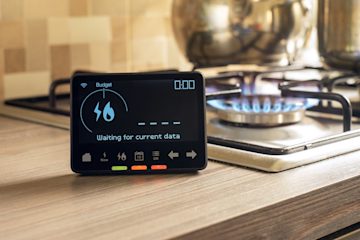
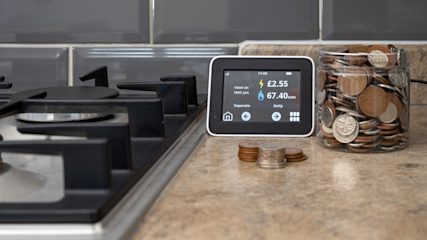
Energy suppliers that fail to repair faulty smart meters will face financial or legal penalties, the Government has announced today (10 March), following a review into smart meter performance. Here's what you need to know.
In August last year, the Government launched a review into smart meter performance standards and has now published the outcome of this review, including new rules for energy suppliers which are set to come into force from early May. These new rules mean:
-
Your energy supplier will have up to 90 days to fix your faulty smart meter or face a penalty. If your smart meter isn't sending readings to your supplier and isn't fixed within 90 days of your supplier being made aware of the issue, it will now face enforcement action by energy regulator Ofgem. This could include fines or legal action. This won't, however, include fixing broken in-home displays (the device that sits in your home and helps you monitor usage).
-
Energy suppliers will be required to submit plans to Ofgem showing how they'll meet their annual smart meter installation targets AND ensure these smart meters are working properly. This will include pre-emptively replacing equipment before its end date.
The Government expects suppliers to begin to take action in 2026 to meet targets and that all suppliers must take 'reasonable steps' to complete the smart meter rollout by 2030. -
All smart meters that are still connected to 2G and 3G will need to be replaced – before the services are switched off by 2033.
The Government is also developing a new 'Consumer Charter' which is aimed at clearly informing consumers of what they can expect from the new rules.
Martin Lewis: 'It's good to see some progress on broken smart meters'
Until now, energy firms have only been fined if they fail to meet targets for installing new smart meters – which doesn't take into account whether a meter is actually working; disincentivising firms from fixing broken ones. This is why MoneySavingExpert.com founder Martin Lewis formally requested Energy Secretary Ed Miliband change the rules in September 2024.
Here's what Martin had to say on today's announcement:

Broken smart meters were high on our list of issues we put to the Government when it came into power – so it is good to see some progress.
Far too many smart meters, likely one in five, don't work as they should – a problem not just for all the homes with broken ones, but for the smart meter rollout. With so many dissatisfied customers, word-of-mouth is bad, so people tell their friends and neighbours not to get one.
We need to shift firms' focus from just installing smart meters to promptly fixing those that are broken – not just meters that go into dumb mode, but crucially all elements, including in-home displays that stop working. That's the aim of this plan, and while it's taking a softer approach than we proposed, it is an improvement and we'll be monitoring to see if it delivers.
I'm also happy the Government has taken up our suggestion of a Consumer Charter, giving people definite rights and timetabling, and look forward to working with them to make sure consumers understand it when it launches.
It follows new Ofgem rules announced last month
The new rules announced today run alongside Ofgem's new 'Guaranteed Standards' which introduced an automatic £40 compensation for consumers having problems with their smart meter or its installation as of 23 February.
Under these new rules, you're eligible for compensation if:
-
You have to wait more than six weeks for an appointment to have your smart meter installed. This only applies to new or first-time installations (not repairs and replacements).
-
Your smart meter installation appointment "fails" due to a "fault within the supplier's control". For example, not having the right engineer with the right skillset, the right metering equipment, or the correct additional equipment (such as safety equipment) necessary to complete the appointment.
-
You report an issue with your smart meter to your energy supplier, and it does not provide you with a "resolution plan" within five working days. Here, suppliers are expected to explain what they've done to assess the issue - which covers both smart meters and linked in-home devices (IHDs) – and what actions they are taking to resolve it.
You currently won't yet be compensated if your smart meter isn't sending readings to your supplier and isn't fixed within 90 days; a rule Ofgem has previously promised to implement. It says it is "currently working on the details of this rule" with a view to "implementing it later this year".
Three in five who reported problem have waited more than three months for a fix
In December last year MoneySavingExpert.com ran a survey, to which almost 10,000 of our users responded, to get a snapshot of their current experiences of smart meter repair. We included, for example, questions on whether they have a smart meter, if it works and, of those that are broken, their experiences with getting them fixed.
Our initial findings show that of those who reported an issue with their smart meter, and haven't yet heard back from their supplier, three in five had been waiting for over six months for a "resolution plan" – something that should be provided within five days, under Ofgem's new guidance.
Our findings also show that of those who had a response from their supplier, three in five had been waiting for more than three months for their problem to be resolved.
We intend to share our findings with the Government and to repeat this survey over the next year to see if Ofgem's new framework makes a difference for consumers.

Share this guide?


 Latest weekly email













Clever ways to calculate your finances


