


How to challenge unfair parking tickets from public bodies
Step-by-step help on fighting public parking penalties

Got an unfair parking penalty from a public body? This step-by-step guide shows you how to challenge and appeal against unfair parking fines from councils, the police and other 'public charging authorities', including Transport for London. It also has free template letters you can use to help beat an unfair penalty.
If your penalty is from a private firm instead, see our Fight unfair private parking tickets guide.
While every effort's been made to ensure this article's accuracy, it doesn't constitute legal advice tailored to your individual circumstances. If you act on it, you acknowledge you're doing so at your own risk.
We can't assume responsibility and don't accept liability for any damage or loss which may arise as a result of your reliance upon it.

First, a quick overview of challenging public parking tickets...
In this guide we show you how to challenge and appeal against a parking penalty from a public body. Here's what you need to know in brief:
This is about PUBLIC parking tickets, not PRIVATE. So a penalty from a council or the police, for example. (We've a separate private parking guide.)
It's all about fighting UNFAIR tickets. If you've been ticketed for breaking the rules, you'll need to pay up. But if you think it's unfair, do challenge it.
Never pay if you plan to challenge. This is considered an admission of liability.
There are various grounds for challenging and appealing. These are the official reasons a ticket can be cancelled, such as wrong signs, the warden making a mistake (for example, they missed your blue badge) or an error on the penalty notice.
You can also claim mitigating circumstances, too. For example, getting a ticket while being ill, broken down or dealing with an emergency.
There are three main types of public parking penalties: Penalty Charge Notices (PCNs), Excess Charge Notices (ECNs) or Fixed Penalty Notices (FPNs).
Challenge in up to three steps. The route differs depending on which penalty you got – we show you how to challenge a PCN, an ECN and an FPN.
Parking ticket need-to-knows
Before we set off, it's crucial that you understand these key points about unfair tickets given by public bodies...
1. Official Penalty Charge Notices are different from Parking Charge Notices
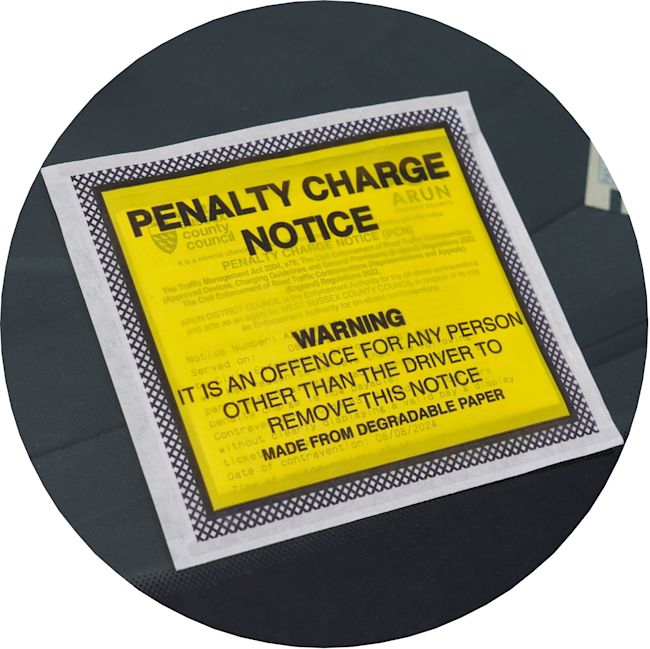
Parking penalties can either be from:
Public bodies (such as councils or the police), OR
Private companies
This guide deals solely with official penalties issued by public bodies. If you've got one of these, it will be called a Penalty Charge Notice, Excess Charge Notice or Fixed Penalty Notice.
Tickets issued by private companies have the similar name of Parking Charge Notice
Agreed, it's confusing. But despite the similar name (and same abbreviation), they're actually completely different.
So if you've got one of these, you'll need our Fight unfair private parking tickets guide.
In this guide, we mainly focus on Penalty Charge Notices (the most common), but we do have help if you've been given an Excess Charge Notice (which are rare) or a Fixed Penalty Notice. These three different penalties have different challenge and appeals processes.
Penalty type | Issued by | What for | Legal status | What to do |
|---|---|---|---|---|
Penalty Charge Notice (PCN) | Councils and other 'public charging bodies' (issued by traffic wardens or by post) | Parking, bus lane or yellow box violations, unpaid charges (such as ULEZ) & more | Civil matter (no prosecution risk for non-payment) | See your grounds to challenge. |
Excess Charge Notice (ECN) | Council traffic wardens | Parking offences | Criminal penalty | Here's what you should do. |
Fixed Penalty Notice (FPN) | Police, councils, DVSA | Parking illegally, speeding, not wearing a seatbelt & more | Criminal offence (can lead to prosecution if ignored) | Here's what you should do. |
2. This is about fighting UNFAIR tickets
Parking and traffic laws are in place for safety and to help the traffic flow, and should benefit us all. Yet mistakes happen, and you can be penalised unfairly. That's the focus of this guide.
However, if you've blocked a school gate, parked on zigzag lines, or caused a huge traffic backlog by taking a break on a red route, this guide isn't intended to help. Even if it did, you'd have little chance of success.
So, if you think your ticket is genuinely unfair (check out the most common grounds for challenging a ticket and mitigating circumstances below), then read on.
You shouldn't be fined within 10 minutes of the end of your parking period
Councils offer a 10-minute grace period after your paid-for parking has ended, in which you shouldn't be charged, as long as you're parked in a council bay.
3. You'll need evidence to strengthen your challenge
If still at the scene, gather as much evidence as possible. If you're reading this after, it's still worth grabbing what you can, as this can be key to winning.
Your evidence should ideally be 'contemporaneous' (made at the time), to truly reflect the situation when you got your parking penalty, so act ASAP.
Here's what to collect:
Photographs. Snap any unclear signs, bay markings or lines, and areas where you believe they should be. Also take pics of where your car was, the meter and your ticket, plus anything else that might be relevant.
Correspondence. Keep the ticket and/or any other notice you've received, and copies of any info you've sent off.
Proof of mitigating circumstances. Keep anything relevant, such as receipts from a recovery company if you were broken down.
Witness statements. If anyone will corroborate your story, get their details and ask them to sign a statement – for instance, if it was impossible to see the signs or you were loading or unloading goods from your car and you stayed within the rules.
4. NEVER pay a parking penalty if you plan on challenging or appealing
Paying the fine is considered an admission of liability – so if you want to challenge or appeal against it, don't pay. But don't just ignore it either, as the charge will go up and up. Instead, follow our step-by-step guide on how to challenge and appeal.
However, if your vehicle has been clamped or towed away, you DO have to pay first to get your motor released, and then you can challenge afterwards.
For more on clamping and towing, see the Trafficase Parking and Traffic Tribunal Key Cases website. (There's a tab labelled 'Issuing of PCNs / Immobilisation and Removal'.)
This independent, non-profit site explains when clamping or towing is allowed, what official notices you may get and how to challenge and appeal.
5. Don't assume the driver's liable for the ticket
Official parking penalties are the responsibility of the vehicle's registered keeper – the person named on its V5C registration document – and not the driver. This applies throughout the UK.
The exception is if you've got a PCN while in a hire car. If this is the case, hire firms can either send you the payment demand or pay the PCN themselves and send you a bill, plus an admin fee. So if you want to challenge or appeal against a PCN issued while driving a hire car, let the hire firm know first.
6. The rules are different for postal tickets

You may have got a parking, bus lane or other traffic PCN through the post if you've been recorded on CCTV apparently breaking the rules.
This of course makes it more difficult to gather evidence for a challenge or an appeal, because the 'contravention' would have taken place days before. The only plus of being seen on CCTV is that you've 21 days to pay at the reduced rate, instead of the usual 14.
If you do decide to challenge or appeal against a PCN sent by post, there's no way of doing this informally, so you jump straight to making formal representations. Read the information the council or other authority provides carefully, as some will still allow you to pay the discounted rate after the formal representations, whereas others won't.
IMPORTANT. Sometimes parking PCNs are sent by post if the council parking warden was prevented from issuing it at the time. If this is the case, only 14 days will apply for the reduced rate.
What are the grounds for a Penalty Charge Notice challenge or appeal?

When challenging a Penalty Charge Notice (PCN) with a council or other public body, or appealing against one with the independent adjudicator if you take it further, there's a strict list of official grounds that apply. These are the reasons a PCN can be cancelled.
The council or other public body might also consider mitigating circumstances or compelling reasons, too (these are more subjective, where they may decide in your favour even though you don't have a case legally). An example is if you've recently had a bereavement.
If you challenge or appeal against a PCN on official grounds you've a good chance of beating the penalty, as long as you can prove your case. If you're citing mitigating circumstances or compelling reasons, it's less certain, even if you think your case is strong.
Official grounds for a PCN challenge or appeal
You were overcharged. The cost shouldn't be more than the standard charges set out in law. Generally the penalty should be £50 (or £110 in London) for a lower-level offence, or £70 (£160 in London) for a higher-level offence.
Always check the issuing authority's website or contact it to confirm the correct amount. We've more info on parking fine costs below.The traffic warden, council or other authority got it wrong. This one is if you simply shouldn't have been given a PCN – for example:
The signs and lines were wrong
The alleged events didn't happen
You were entitled to park there
You were loading or unloading
A passenger was getting in or out
You displayed a valid blue badge
You displayed a valid pay-and-display ticket or permit
The traffic rules were wrong. For example, a council might have added a new restriction, such as a yellow line, and didn't follow proper procedures for the 'Traffic Regulation Order' in doing so. You can check orders for England (outside London) and Wales with the Traffic Penalty Tribunal or the council.
There was an error on the PCN or other document. Authorities MUST include specific information on parking notices by law. Here's what should be included:
The council wrongly claimed the warden was stopped from issuing the PCN. If the warden had the opportunity to put a PCN on the vehicle, the issuing body can't then decide to send one via post.
You didn't own the vehicle at the time. You'll need to prove you weren't the registered keeper at the time, which your log book (V5C) or dealer/showroom receipt will show. If you sold the car before the PCN was issued, send copies of the receipt of sale, and proof you'd informed the DVLA.
Your vehicle was stolen or used without consent. If someone parks or otherwise uses your vehicle in a way that results in a PCN, it can be waived if you can prove the misuse – for example, if you'd reported it to the police.
You've already paid the PCN or charge. If you paid the discounted rate on time, the penalty charge shouldn't have increased. Gather evidence to show you paid, or attempted to, such as bank statements or receipts.
If you'd already paid a relevant charge (such as the Dart charge or London congestion charge) on time and in the right way, the PCN shouldn't have been issued.The vehicle was hired. If you work for a hire firm, you may cite the formal hire agreement where the hirer has accepted liability for penalty charges. You should provide the hirer's name and address and a copy of the agreement.
You can also claim there were mitigating circumstances or 'compelling reasons'

You may feel you had good reason for breaking parking rules. While you don't have an automatic right not to get a ticket in these circumstances, many councils or other public bodies may take into account mitigating circumstances or compelling reasons, such as:
You had broken down.
You were dealing with an emergency or clearing something from the road.
You were dropping someone at hospital who was ill.
You were too ill to move your car.
You were recently bereaved.
You needed to park to attend a funeral or were unable to move your car because you were attending one.
You were on holiday when the parking bay was suspended and the warning was put up while you were away.
You bought a ticket/had a permit but it fell off the window or was not visible (technically it's your responsibility to display the ticket correctly, so prepare for possible defeat, but it's worth challenging and appealing).
It was your first offence within a council's boundaries. Councils say this in itself is not a valid reason to waive the charge, but it's worth a go.
You're a law-abiding citizen who made an honest mistake.
You cannot afford the fine – you will likely have to present proof of your financial position as evidence.
If you're in this situation, know that help is out there. Our Debt help guide can show you how to assess your situation and point you towards free support, among other helpful tips.
When CAN'T I challenge or appeal against a Penalty Charge Notice?
There are also some reasons, that although might sound like good excuses, simply won't cut it – for example:
If you were getting change to put in a meter or machine. You'll only have grounds for challenging and appealing if you were on the way back to pay for parking.
If you disagree with the parking regulations.
If you only broke parking rules for a few minutes (though there is a 10-minute grace period after a parking ticket expires in which you shouldn't be fined).
If you agree you were blocking the road or footpath.
If there was nowhere else to park.
Is it worth challenging or appealing against a parking fine?
Normally, if you pay a Penalty Charge Notice (PCN) within 14 days of it being issued (or within 21 days if it was issued by post based on CCTV footage), you can pay half-price – so it's important to weigh up the risks involved in challenging.
Crucially, in the case of parking PCNs issued by a warden, most councils will let you submit an informal challenge first and still pay the discounted rate if you lose. So, doing this in these cases is an absolute 'no lose' scenario. If you think the PCN's unfair, you may as well give it a try.
But as the flowchart below shows (there's a text version of this too), the risk jumps if you challenge by making formal representations against the PCN – after this, if you end up paying the penalty charge, you'll pay full price. So, you may as well take it all the way to the independent adjudicator if you make it this far.
Read a text description of the public parking challenge and appeals process
Our flowchart starts when you receive a Penalty Charge Notice.
It shows you have two options: challenge or pay.
-
If you pay, you can do so at half-price within 14 days of the PCN being issued (or 21 days if it was issued by post, based on CCTV footage). You could also make an informal challenge (in the case of parking penalties issued by a warden) and still pay at the discounted rate if you lose. After this point, you must pay the full amount.
-
If you challenge, and it's a parking PCN issued by a warden...
Step 1 is to make an informal challenge. If you win, there's nothing to pay; if you lose, as above, you can usually still pay at half-price within 14 days of the rejection letter.
Step 2 – or the first step if it's a postal PCN – is to challenge by making formal representations to the council or other public charging authority. Win and you pay nothing; lose and you must usually pay in full. If you do lose...
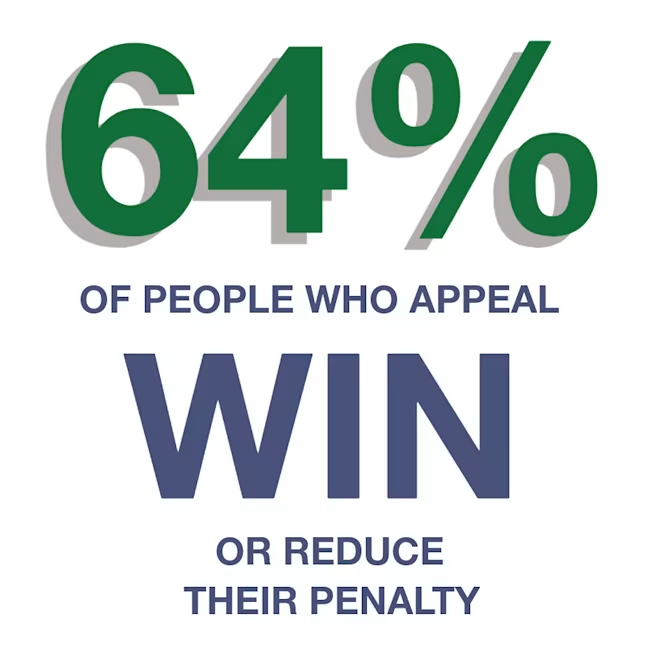
Step 3 is to submit an appeal to the independent adjudicator. Win and you pay nothing; lose and you must pay in full. At the Traffic Penalty Tribunal for England (outside London) and Wales, up to 64% of appeals end in success or a reduced charge.

How to challenge and/or appeal against a Penalty Charge Notice
Here's a step-by-step guide to challenging and/or appealing against a Penalty Charge Notice (PCN) in England and Wales.
The rules are similar in Scotland and Northern Ireland, with small differences. For precise info, go to the First-Tier Tribunal for Scotland site or the Northern Ireland Traffic Penalty Tribunal site.
(If you've been given a Fixed Penalty Notice or Excess Charge Notice, the rules are different.)
Step 1. Make an informal challenge
IMPORTANT. This step only applies to parking PCNs issued by a warden. If your PCN was issued by post, skip to Step 2.

If you've found a PCN on your car, it's worth first making an informal challenge – but do so within 14 days. That way, if you lose, most councils and Transport for London will still allow you to pay the fine at the reduced rate, so you won't have lost anything.
Use the contact details on the PCN to challenge the penalty. As this is an informal challenge, you don't necessarily need to rely on the formal grounds mentioned above, but it may help your case if you do. You can send a letter or email, or some authorities will have an online form.
Not sure what to write? Use our free template as a basis:
Our FREE council PCN informal challenge letter ✉️
[Insert date]
[Insert name and address of PCN issuer]
Dear Sir or Madam,
PCN number: [insert reference number beginning with the letter prefix of the council]
Vehicle registration number: [insert vehicle registration number]
I received a PCN on [insert date] but I believe [select 'the penalty was wrongly issued' or 'there are mitigating circumstances to explain why I had parked where I did'] and I would like to submit an informal challenge for the following reasons:
[Important: fill in the sections below and delete any bullets that don't apply]
I was overcharged. The charge is more than the standard amount outlined on the [insert authority's name] website.
The alleged contravention did not occur. The parking attendant/council/charging body [delete as appropriate] got it wrong and I was not parked inappropriately at the time the ticket was issued. This is due to the fact [insert reason here]. Please see attached evidence, [include and explain any evidence here], as proof of my appeal.
The traffic rules are wrong. The [insert the charging authority] didn't follow proper procedures for the 'Traffic Regulation Order' [insert the error and evidence as appropriate].
[The charging authority] made an error on the PCN or other document [insert as appropriate]. The charging authority didn't include all of the required information on the [insert relevant document]. Please the attached document as proof.
The council wrongly claimed the warden was stopped from issuing the PCN. The warden had the opportunity to put a PCN on the vehicle [include and explain any evidence here].
I didn't own the vehicle at the time. I wasn't the registered keeper at the time of the alleged contravention. Please see the attached evidence as proof of my informal challenge [include and explain any evidence here].
My car had been stolen or used without consent. I was not driving my vehicle at the time of the alleged contravention because my vehicle had been stolen/used without my consent. Please see the enclosed correspondence from the police as evidence [delete as appropriate].
There was insufficient signage. I couldn't determine what the relevant parking restrictions were because there was no clear signage to explain them. Please see attached evidence, [include and explain any evidence here], as proof of my informal challenge.
There were mitigating circumstances. There are mitigating circumstances to explain why I parked where I did so I am requesting that the fine be waived.
Please see attached evidence, [include and explain any evidence here], as proof of my appeal.
[Not being able to afford the penalty is also a mitigating circumstance. If so, you may wish to include the following wording, or delete as appropriate] I am a law-abiding citizen and I made an honest mistake but I cannot afford the fine. Please see attached proof of my financial position as evidence [include evidence].I've already paid the PCN. I have already paid the PCN in time, so it shouldn't have increased/I shouldn't have been issued a new penalty for the same offence [delete as appropriate]. Please find attached proof as evidence.
The vehicle was hired. The hirer had accepted liability for penalty charges as part of the hire agreement. Please see below the hirer's name and address and a copy of the agreement: [include evidence as required].
[Enter any further reasons to support your challenge and include as much detail as you can]
Yours faithfully,
[Insert your signature, if it's a letter]
[Insert your name (printed, if it's a letter)]
[Enclose ALL relevant evidence for your claim]
Step 2. Make formal representations
The next stage of challenging (or the first if your PCN was sent by post) is making formal representations to the council or other public body.
If you're at this stage, you'll either have a Notice to Owner (NTO) – for warden-issued PCNs – or a PCN sent by post:
-
If you have an NTO, it's because either you made an informal challenge and lost, or you haven't paid or challenged the parking PCN 28 days after it was first issued by the warden. After the NTO arrives, it’s too late to challenge the PCN informally.
Once you receive an NTO, you've 28 days to pay or make formal representations to the council, otherwise the penalty could increase by another 50% and you'll lose the chance to challenge or appeal against it. -
If you have a PCN sent by post, the informal challenge stage doesn't apply. You can now either:
-
Pay the fine at the discounted 50% rate within 14 or 21 days, whichever applies (bus lane and 'moving traffic' PCNs, or parking PCNs issued from CCTV footage, allow 21 days), OR
-
Make formal representations to challenge it. Do so within 14 or 21 days, and you'll usually be able to pay the reduced rate if your challenge is rejected. It will help to know what info must be included on postal PCNs by law. If you were seen on CCTV, you can ask for any photographs or other evidence the council has.
-
This is the key decision point. Up to 64% of drivers get a positive result when appealing to the independent adjudicator. So there's no reason to stop after Step 2 – the fine will stay the same amount within the regulated time limits, so you might as well continue.
How to write your formal representations
Fill in the form with all the details – it should include a space for you to put the grounds for challenge/appeal, but you may also write a separate letter or email outlining your representations to ensure you've enough space to get all your points across. Here's a template to help:
Our FREE formal representations against a PCN letter ✉️
[Insert date]
[Insert name and address of PCN issuer]
Dear Sir or Madam,
PCN number: [insert reference number beginning with the letter prefix of the authority]
Vehicle registration number: [insert vehicle registration number]
I am writing to make formal representations regarding the PCN above. This letter is in addition to my completed representations form, which is enclosed/has been submitted online [delete as appropriate]. I am making representations due to the following reasons:
[Important: fill in the sections below and delete any bullets that don't apply]
I was overcharged. The charge is more than the standard amount outlined on the [insert authority's name] website.
The alleged contravention did not occur. The parking attendant/council/charging body [delete as appropriate] got it wrong and I was not parked inappropriately at the time the ticket was issued. This is due to the fact [insert reason here]. Please see attached evidence, [include and explain any evidence here], as proof of my appeal.
The traffic rules are wrong. The [insert the charging authority] didn't follow proper procedures for the 'Traffic Regulation Order' [insert the error and evidence as appropriate].
[The charging authority] made an error on the PCN or other document [insert as appropriate]. The charging authority didn't include all of the required information on the [insert relevant document]. Please the attached document as proof.
The council wrongly claimed the warden was stopped from issuing the PCN. The warden had the opportunity to put a PCN on the vehicle [include and explain any evidence here].
I didn't own the vehicle at the time. I wasn't the registered keeper at the time of the alleged contravention. Please see the attached evidence as proof of my informal challenge [include and explain any evidence here].
My car had been stolen or used without consent. I was not driving my vehicle at the time of the alleged contravention because my vehicle had been stolen/used without my consent. Please see the enclosed correspondence from the police as evidence [delete as appropriate].
There was insufficient signage. I couldn't determine what the relevant parking restrictions were because there was no clear signage to explain them. Please see attached evidence, [include and explain any evidence here], as proof of my informal challenge.
There were mitigating circumstances. There are mitigating circumstances to explain why I parked where I did so I am requesting that the fine be waived.
Please see attached evidence, [include and explain any evidence here], as proof of my appeal.
[Not being able to afford the penalty is also a mitigating circumstance. If so, you may wish to include the following wording, or delete as appropriate] I am a law-abiding citizen and I made an honest mistake but I cannot afford the fine. Please see attached proof of my financial position as evidence [include evidence].I've already paid the PCN. I have already paid the PCN in time, so it shouldn't have increased/I shouldn't have been issued a new penalty for the same offence [delete as appropriate]. Please find attached proof as evidence.
The vehicle was hired. The hirer had accepted liability for penalty charges as part of the hire agreement. Please see below the hirer's name and address and a copy of the agreement: [include evidence as required].
[Enter any further reasons to support your challenge and include as much detail as you can]
Yours faithfully,
[Insert your signature, if it's a letter]
[Insert your name (printed, if it's a letter)]
[Enclose ALL relevant evidence for your claim]
If you made an informal challenge, also resend all that information as it may be reviewed by someone who hasn't seen the original details.
The council then has 56 days to respond to your formal representations or you win by default. Though, if you need to take it further...
Step 3. Make a final appeal to the independent adjudicator
If your formal representations are unsuccessful, you'll be sent a 'Notice of Rejection of Representations' letter, which includes information explaining how to appeal against the PCN at an independent tribunal.
By this point you've lost the chance of paying half-price anyway, so you may as well keep going. You'll need to submit the appeal (or pay the PCN) within 28 days of receiving the Notice of Rejection of Representations.
Note that, in a tiny number of cases, the independent tribunal can award costs to a council if it rejects your appeal as being "frivolous, vexatious or wholly unreasonable". For instance, if you blatantly blocked a hospital entrance and appealed anyway.
Look at past cases before you appeal
The Trafficase website publishes key cases from UK traffic adjudicators, as well as the High Court, relating to parking, bus lane, moving traffic and other types of PCNs. These highlight common issues and points of law that may be relevant to your case, and can help you to plan your appeal.
Why you shouldn't worry about going to the adjudicator
Don't be put off by the idea of going to the adjudicator. First off, it'll be independent and appointed by the Government, not any council or authority. And most importantly, it's free and NOT like a court hearing – it can be done fully online in the case of the Traffic Penalty Tribunal (for England, outside London, and Wales), or by post.
You usually have the option of a hearing (in person, by phone or video call) if you'd like to explain yourself further. But for most people, an online or written appeal will be enough, provided you supply the relevant evidence to support your case.
Which body you need to appeal to
The body you need to appeal to depends on the location of the alleged penalty offence:
-
England or Wales (not London): Traffic Penalty Tribunal
-
Scotland: First-Tier Tribunal for Scotland
-
Northern Ireland: Northern Ireland Traffic Penalty Tribunal
Again, submit every last smidgeon of evidence. As with the formal representations, you will have the opportunity to explain your case. Here's a template for how you might describe it:
Our FREE independent tribunal PCN appeal explanation template ✉️
[Insert date]
[Insert name and address of parking ticket issuer]
Dear Sir or Madam,
PCN number: [insert reference number beginning with the letter prefix of the authority]
Vehicle registration number: [insert vehicle registration number]
I am writing to submit an appeal for adjudication regarding the PCN above. This letter is in addition to my completed appeal form, which is enclosed/has been submitted [delete as appropriate]. I am making my appeal due to the following reasons:
[Important: fill in the sections below and delete any bullets that don't apply]
The alleged contravention did not occur. The parking attendant/council/charging body [delete as appropriate] got it wrong and I was not parked inappropriately at the time the ticket was issued. This is due to the fact [insert reason here]. Please see attached evidence, [include and explain any evidence here], as proof of my appeal.
The traffic rules are wrong. The [insert the charging authority] didn't follow proper procedures for the 'Traffic Regulation Order' [insert the error and evidence as appropriate].
[The charging authority] made an error on the PCN or other document [insert as appropriate]. The charging authority didn't include all of the required information on the [insert relevant document]. Please the attached document as proof.
The council wrongly claimed the warden was stopped from issuing the PCN. The warden had the opportunity to put a PCN on the vehicle [include and explain any evidence here].
I didn't own the vehicle at the time. I wasn't the registered keeper at the time of the alleged contravention. Please see the attached evidence as proof of my informal challenge [include and explain any evidence here].
My car had been stolen or used without consent. I was not driving my vehicle at the time of the alleged contravention because my vehicle had been stolen/used without my consent. Please see the enclosed correspondence from the police as evidence [delete as appropriate].
There was insufficient signage. I couldn't determine what the relevant parking restrictions were because there was no clear signage to explain them. Please see attached evidence, [include and explain any evidence here], as proof of my informal challenge.
There were mitigating circumstances. There are mitigating circumstances to explain why I parked where I did so I am requesting that the fine be waived.
Please see attached evidence, [include and explain any evidence here], as proof of my appeal.
[Not being able to afford the penalty is also a mitigating circumstance. If so, you may wish to include the following wording, or delete as appropriate] I am a law-abiding citizen and I made an honest mistake but I cannot afford the fine. Please see attached proof of my financial position as evidence [include evidence].I've already paid the PCN. I have already paid the PCN in time, so it shouldn't have increased/I shouldn't have been issued a new penalty for the same offence [delete as appropriate]. Please find attached proof as evidence.
The vehicle was hired. The hirer had accepted liability for penalty charges as part of the hire agreement. Please see below the hirer's name and address and a copy of the agreement: [include evidence as required].
[Enter any further reasons to support your challenge and include as much detail as you can]
Yours faithfully,
[Insert your signature, if it's a letter]
[Insert your name (printed, if it's a letter)]
[Enclose ALL relevant evidence for your claim]
What happens if I lose?
You need to pay the penalty within 28 days or it can increase by 50%.
In some limited circumstances, you may be able to take your case further – this will be explained if you lose your appeal.
For more on what happens after the adjudicator's decision and general information about the appeal process, visit the relevant website listed above.
What if there are mitigating circumstances?
Sometimes, the appeal's dismissed but the adjudicator deems that there are compelling reasons why the penalty should not be paid. This is usually due to mitigating circumstances.
The adjudicator can't force the council to waive the penalty but can ask it to. The council has 35 days to tell you and the adjudicator its decision.
Got an Excess Charge Notice or Fixed Penalty Notice? The rules are different
In rare cases, your parking ticket may be an Excess Charge Notice (still issued by a few councils) or a Fixed Penalty Notice (issued for various traffic and motoring offences, from speeding to not wearing a seatbelt).
These notices operate under criminal law rather than civil law, so there are different rules for appealing.
What should I do if I get an Excess Charge Notice from a council?
There's up to a three-stage process...
Stage 1. Make an informal appeal
Whether you have seven or 14 days to appeal depends on the council, so check the penalty notice carefully. If you submit an appeal on time, most councils will still allow you to pay the reduced rate even if it's rejected.
At this point, there's generally no form to fill in (though it's worth checking the council's website, in case there is one), so you'll need to send a letter. Here's a template to help:
Our FREE informal council parking ticket appeal letter (ECN) ✉️
[Insert date]
[Insert name and address of ECN issuer]
Dear Sir or Madam,
ECH number: [insert ticket reference number]
Vehicle registration number: [insert vehicle registration number]
[Include this section if you received a ticket on your car or delete]
I received an ECN on [insert date] but I believe [select 'the ticket was wrongly issued' or 'there are mitigating circumstances to explain why I had parked where I did'] and I would like to submit an informal appeal for the following reasons:
[Important: fill in the sections below and delete any bullets that don't apply]
The alleged contravention did not occur. The parking attendant/council/charging body [delete as appropriate] got it wrong and I was not parked inappropriately at the time the ticket was issued. This is due to the fact [insert reason here]. Please see attached evidence, [include and explain any evidence here], as proof of my appeal.
The traffic rules are wrong. The [insert the charging authority] didn't follow proper procedures for the 'Traffic Regulation Order' [insert the error and evidence as appropriate].
The [charging authority] made an error on the ECN or other document [insert as appropriate]. The charging authority didn't include all of the required information on the [insert relevant document]. Please the attached document as proof.
The [charging authority] wrongly claimed the warden was stopped from issuing the ECN. The warden had the opportunity to put an ECN on the vehicle [include and explain any evidence here].
I didn't own the vehicle at the time. I wasn't the registered keeper at the time of the alleged contravention. Please see the attached evidence as proof of my informal challenge [include and explain any evidence here].
My car had been stolen or used without consent. I was not driving my vehicle at the time of the alleged contravention because my vehicle had been stolen/used without my consent. Please see the enclosed correspondence from the police as evidence [delete as appropriate].
There was insufficient signage. I couldn't determine what the relevant parking restrictions were because there was no clear signage to explain them. Please see attached evidence, [include and explain any evidence here], as proof of my informal challenge.
There were mitigating circumstances. There are mitigating circumstances to explain why I parked where I did so I am requesting that the fine be waived.
Please see attached evidence, [include and explain any evidence here], as proof of my appeal.
[Not being able to afford the penalty is also a mitigating circumstance. If so, you may wish to include the following wording, or delete as appropriate] I am a law-abiding citizen and I made an honest mistake but I cannot afford the fine. Please see attached proof of my financial position as evidence [include evidence].I've already paid the ECN. I have already paid the ECN in time, so it shouldn't have increased/I shouldn't have been issued a new penalty for the same offence [delete as appropriate]. Please find attached proof as evidence.
[Enter any further reasons to support your appeal and include as much detail as you can]
Yours faithfully,
[Insert your signature]
[Insert your name (printed)]
[Enclose ALL relevant evidence for your claim]
Take it any further than this, and you'll probably lose your chance to pay a reduced fee
Double-check with the council – even if you believe in the justice of your case, it's worth balancing what you'll gain by winning with the time and cost of losing.
Stage 2. Appeal to a more senior parking official
Some councils may then let you appeal again to a more senior parking official. You'll be told whether this is the case for you in your rejection letter – it's also worth checking the council's website for more details.
If you're not able to, move on to the next stage.
Stage 3. Appeal to the ombudsman
At this point, the council will send a letter demanding payment. You have the option of appealing to the relevant ombudsman service, which is free – you can ask it to investigate if you feel the council got it wrong or failed to show discretion regarding mitigating circumstances.
An ombudsman can only usually intervene where there has been a procedural error. Yet, as few cases are black and white, it's worth at least contacting the ombudsman for guidance.
There are four relevant services, depending on where the fine was issued:
-
In England: Use the Local Government & Social Care Ombudsman.
-
In Wales: Use the Public Services Ombudsman for Wales.
-
In Scotland: Use the Scottish Public Services Ombudsman.
-
In Northern Ireland: Use the Northern Ireland Public Services Ombudsman.
You could also take your council to court if it applied the law incorrectly. However, this will cost you serious money should you lose. Seek legal advice before you take this nuclear option.
What if I've got a Fixed Penalty Notice from the police?

This is usually a one or two-stage process. Unfortunately, if you have a police ticket your chances of success are likely to be lower than with a council ticket.
Stage 1. If allowed, make an informal appeal
Officially, appeals against police tickets can only be made via the courts, but some forces may allow informal appeals. The notice or vehicle release form may indicate whether you can informally challenge the parking penalty. If it's not clear, call the issuing police force or any number listed on the penalty notice to check.
Usually, you'll be writing to a department called the 'Central Ticket Office', which deals with many types of police fines. There are no forms to fill in; you just send a letter. Make sure you submit all supporting evidence to give yourself a greater chance of winning, and include your address, your vehicle registration number and the penalty notice number. Here's a template to help:
Our FREE informal police parking ticket appeal letter (FPN) ✉️
[Insert date]
[Insert name and address of FPN issuer]
Dear Sir or Madam,
FPN number: [insert reference number beginning with the letter prefix of the charging body]
Vehicle registration number: [insert vehicle registration number]
[Include this section if you received a ticket on your car or delete]
I received an FPN on [insert date] but I believe [select 'the ticket was wrongly issued' or 'there are mitigating circumstances to explain why I had parked where I did'] and I would like to submit an appeal for the following reasons:
[Important: fill in the sections below and delete any bullets that don't apply]
I was overcharged. This charge is more than the standard amount outlined on the [insert authority's name] website.
The alleged contravention did not occur. The parking attendant/council/charging body [delete as appropriate] got it wrong and I was not parked inappropriately at the time the ticket was issued. This is due to the fact [insert reason here]. Please see attached evidence, [include and explain any evidence here], as proof of my appeal.
The traffic rules are wrong. The [insert the charging authority] didn't follow proper procedures for the 'Traffic Regulation Order' [insert the error and evidence as appropriate].
The [charging authority] made an error on the FPN or other document [insert as appropriate]. The charging authority didn't include all of the required information on the [insert relevant document]. Please the attached document as proof.
The [charging body] wrongly claimed the warden was stopped from issuing the FPN. The warden had the opportunity to put a PCN on the vehicle [include and explain any evidence here].
I didn't own the vehicle at the time. I wasn't the registered keeper at the time of the alleged contravention. Please see the attached evidence as proof of my informal challenge [include and explain any evidence here].
My car had been stolen or used without consent. I was not driving my vehicle at the time of the alleged contravention because my vehicle had been stolen/used without my consent. Please see the enclosed correspondence from the police as evidence [delete as appropriate].
There was insufficient signage. I couldn't determine what the relevant parking restrictions were because there was no clear signage to explain them. Please see attached evidence, [include and explain any evidence here], as proof of my informal challenge.
There were mitigating circumstances. There are mitigating circumstances to explain why I parked where I did so I am requesting that the fine be waived.
Please see attached evidence, [include and explain any evidence here], as proof of my appeal.
[Not being able to afford the penalty is also a mitigating circumstance. If so, you may wish to include the following wording, or delete as appropriate] I am a law-abiding citizen and I made an honest mistake but I cannot afford the fine. Please see attached proof of my financial position as evidence [include evidence].I've already paid the FPN. I have already paid the FPN in time, so it shouldn't have increased/I shouldn't have been issued a new penalty for the same offence [delete as appropriate]. Please find attached proof as evidence.
The vehicle was hired. The hirer had accepted liability for penalty charges as part of the hire agreement. Please see below the hirer's name and address and a copy of the agreement: [include evidence as required].
[Enter any further reasons to support your appeal and include as much detail as you can]
Yours faithfully,
[Insert your signature]
[Insert your name (printed)]
[Enclose ALL relevant evidence for your claim]
If the police force rejects your appeal it will inform you in writing. If you win, that's fantastic. If not, move on to the next stage.
Stage 2. The formal appeals process – you'll have to go to court
If your appeal is rejected or you're unable to make an informal appeal, you'll get a Notice to Owner form with the following options:
-
Pay the charge
-
Give another driver's name (mainly for hire companies, as the registered keeper is responsible)
-
Request a hearing at a magistrates' court
If you don't act within 28 days, the fine will increase by 50% and you'll get a court summons.
If you want to contest it, you can opt for a hearing. This isn't easy, and for all but the most determined and legally aware, it's probably better to simply accept the parking penalty.
If you do decide to continue, you may want to consider legal advice as you'll have to attend a hearing to set out your case. In addition, if you lose, you may have to pay court costs.
Parking ticket appeal FAQs
Do I have to pay a Penalty Charge Notice?
If you believe that you HAVEN'T broken any rules with your parking, and that your fine's unfair, do challenge your Penalty Charge Notice (PCN), which is what this guide helps with.
However, if you HAVE broken the rules while parking, then yes, you have to pay the PCN.
You will usually have 28 days to pay, and the fine is reduced if you pay within 14 days (21 days if the PCN is issued based on CCTV evidence).
If you DON'T pay within 28 days, you'll get a 'charge certificate', and the fine is increased by half. If you don't pay this within 14 days, you'll receive a court order demanding payment (aka an 'order of recovery'), and you'll then get an extra 21 days to pay the PCN or challenge the court order before the bailiffs are sent round.
Do parking tickets go on your record?
Penalty Charge Notices for parking don't go on your driving or criminal record, as they are civil fines and have no reflection on how safe a driver you are.
However, as Fixed Penalty Notices (FPNs) and Excess Charge Notices (ECNs) are issued for criminal offences, one could appear on your criminal record IF you refused to pay the fine and were convicted in court. Don't let it get to this stage.
You won't get points on your driving licence for an ECN, but you could get anything from two to 11 points for an FPN.
We've more on the different types of parking fines.
Can parking tickets affect your credit rating?
A parking penalty will only affect your credit rating if you fail to pay it. In this instance, you could end up with a County Court Judgment (CCJ), a court order demanding that you pay a fine. A CCJ will appear on your credit report and stay there for six years – but you can have the judgment removed if you pay the money within one month.
Having a CCJ on your credit report can significantly lower your credit score and affect your ability to borrow. So, DON'T IGNORE a parking ticket – the best thing to do is either pay it or challenge it if you think it's unfair.
Do parking tickets affect insurance?
This depends on the type of parking penalty that you get.
A Penalty Charge Notice usually won't affect your car insurance premium. This is because insurers focus on offences such as speeding and not wearing a seatbelt when considering a driver's history.
A Fixed Penalty Notice (FPN), however, could affect your premium, depending on the offence you got it for.
If it's for something minor, where you're fined and not given penalty points on your licence, it's unlikely to have an impact on your car insurance. But if you do get penalty points – which can be given for parking on zigzag lines – your premium could rise at renewal.
As a rule of thumb, let your insurer know if you get an FPN and penalty points added to your licence.
For help keeping your car insurance costs to a minimum, see our Cheap car insurance guide.
How much is a parking penalty fine?
How much a parking fine costs will depend on factors such as:
-
The ticket type. A parking Penalty Charge Notice will typically set you back either £50 or £70 (£110 or £160 in London). A Fixed Penalty Notice tends to be between £50 and £100, but can rise to £300 in exceptional (and usually non-parking) cases.
-
The severity of the offence. You can be charged more for parking on a double yellow line than overstaying in a pay and display bay, for instance.
-
The location. Public parking penalties are more expensive in London than elsewhere.
-
How early you pay. Most councils offer a 50% discount if you pay the fine within 14 days.
-
If you pay late. If you don't pay a fine within 28 days, it may go up.
Share this guide?