Top savings accounts
Top easy access & fixed savings, savings tax & ways to boost your rate

You can pick ‘n’ mix as many types of savings accounts as you want to combine terms that suit you and to max your interest. This guide covers the top easy-access and fixed accounts, three specialist rate boosters, plus savings tax and ways to reduce it.
-
Top easy-access (variable) savings. The basics of savings accounts. You get decent interest with the flexibility to move your cash elsewhere, but rates can go up or down, so ditch & switch when needed. Put all cash you don't imminently need into one of these.
Cahoot 5% (up to £3,000) | Trading 212 4.76% (cash ISA) | Chase 4.5% (up to £3m) -
Top fixed savings. You get a guaranteed interest rate, without needing to monitor it. Usually you must lock cash away, though right now a rare one-year fix allows early access in return for an interest penalty (which is also how fixed cash ISAs work). So if you want to fix, but there's a chance you might need your cash, it offers a get-out-of-jail-free card.
One year: Marcus 4.6% with early access, MBNA 4.85% | Two years: Recognise 4.85% -
Specialist rate boosters. There are three special savings accounts that pay much more than the basic savings building blocks above – up to a 50% boost. Get them if you can.
-
How savings tax works & ways to reduce it. Savings aren't taxed, but the interest earned on them is. There are FOUR main savings tax allowances, most don't use them all.
You have full UK £120,000 savings safety protection
All banks listed are fully UK-regulated & covered by the Financial Services Compensation Scheme, which protects up to £120,000 per person, per institution.
Some banks share a licence, so the limit is shared across multiple banks. You can use our Which banks are linked? tool to check. Full info in Are your savings safe?
Martin Lewis: 3 key things to consider before saving
While building up savings, especially for emergencies, is a crucial aim for everyone, it isn't necessarily always the first thing to do…

1. Saving is investing’s poorer cousin – should you be investing? The first place to put spare money is always to build up a cash emergency fund of three to six months' worth of bills. But for money you won’t use for 5+ years, saving isn’t usually the winner. It's worth considering putting some of the rest in a broad spread of investment (eg, a global tracker fund that mirrors the performance of a huge range of companies). Do read my new Beginners guide to investing.
2. Got costly debt? It's usually best to use spare cash to clear it first, after all pay off a grand’s on a credit card at 25% APR rather than save at 5% and you’re £200 a year better off. See Should I pay debt with savings?
3. Is overpaying your mortgage a better way to save? If your mortgage rate is the same or higher than you earn in savings, check our Mortgage Overpayment Calc to see if it may be worth you overpaying. If it looks likely, read Should I overpay my mortgage? for full pros & cons.
Top easy-access savings
Rates are variable, so they move, typically in line with the Bank of England base rate. But you've the freedom to withdraw at any point. To maximise your interest, check your interest rate a few times a year, then move your cash elsewhere if it has fallen behind the top payers.
Bigger savers, with multiple accounts, may find savings platforms where you can move accounts between a panel of firms with just a click, far less hassle.
Most accounts allow unlimited withdrawals, though some do limit how often you can withdraw in return for a boosted rate – we highlight if this is the case.

Easy-access accounts – what we'd go for
The benchmark rate is 4.5%: Top unlimited withdrawals on up to £3m. Chase (part of JP Morgan) pays 4.5%* which includes a one-year newbies' bonus (so ditch & switch after). To get it you need its free current account, it's quick & easy to open, you needn’t switch & there's only an ID check, so no impact to your credit file.
Get up to 5% on smaller amounts. Cahoot pays 5% on up to £3,000 (no interest above) & on up to £20,000 (includes a one-year bonus).
Earn 4.76% if you’ve not used a cash ISA since April. A cash ISA is just a savings account you can put up to £20,000 per tax year in, and the interest isn’t ever taxable. Even if you don’t need the tax benefit, as rates are high, just use it for normal savings.
Via our link, on new money (ie, not ISA transfers), and on new money & transfers but limits you to just three withdrawals a year. Both include a one-year newbies' bonus. Click the links for more info.
Want the top simple rate? The top no-bonus, open-to-all, no-withdrawal-limit savings account is Secure Trust Bank's 4.21% on up to £250,000.
|
Top easy-access savings accounts |
|
|---|---|
Top cash ISAs outpay almost all 'normal' savings.Cash ISAs are savings accounts you never pay tax on. But they're winners even if you don't need the tax benefits, as rates are so high. |
|
|
Top cash ISA
, 4.76%
- 3.6% variable + 1yr 1.16% bonus
- Min. £1,
Max. £20,000 each tax year
- Open online or via app
- Interest paid: monthly
- Is a |
Top cash ISA for transfers
, 4.75%
- 3.45% variable + 1yr 1.3% bonus
- Min. £500,
Max. £20k a yr
- Open online or via app
- Interest paid: annually
- Is not a |
Top 'normal' savings accounts(In rate order – see what we'd go for above) |
Top rates from 'big names'(As we know some prefer to save with these) |
|
Earn 5% but only on up to £3,000 - Account lasts 1yr (but rate is variable)
- Min. £1,
Max. £3,000
- Open online
- Interest paid: monthly or annually
- Sole or joint accounts |
Max 3/yr withdrawals - Can make withdrawals on 3 days of your choice each year
- Min. £1,
Max. £500,000
- Open online
- Interest paid: annually
- Sole or joint accounts |
|
Earn 4.55% on up to £20,000
, 4.55%
- 3% variable + 1yr 1.55% bonus (account must be open 1yr to get the bonus, so if rate falls, move your cash but keep a min £1 saved)
- Min. £10,
Max. £20,000
- Open via app
- Interest paid: monthly (bonus paid after 1yr)
- No joint accounts |
- Account lasts 1yr (but rate is variable)
- Min. £1,
Max. £500,000
- Open online
- Interest paid: monthly or annually
- Sole or joint accounts |
|
Top on large amounts via free, easy-to-open current account
, 4.5%
- 2.25% variable + 12mth 2.25% bonus
- Min. £1,
Max. £3m
- Open via app
- Interest paid: monthly
- No joint accounts |
Tesco Bank, 4.16%
- 1.05% variable + 1yr 3.11% bonus
- Min. £1,
Max. £1m
- Open online
- Interest paid: annually
- Sole or joint accounts |
|
Top no fuss savings rate
Secure Trust Bank, 4.21%
- Min. £1,
Max. £250,000
- Open online
- Interest paid: monthly
- Sole or joint accounts |
Post Office, 4.15%
- 0.9% variable + 1yr 3.25% bonus
- Min. £1,
Max. £2m
- Open online
- Interest paid: monthly or annually
- Sole or joint accounts |
Ways to boost your interest.Some non-standard accounts pay higher rates. |
|
|
Requires you to actively use its £3/mth current account
, 6%
- Requires its current account (click for info)
- Min. £1,
Max. £4,000
- Open online, via app or in branch
- Interest paid: monthly
- No joint accounts |
|
|
All rates are AER. Santander and Cahoot, and Tesco Bank and Barclays Bank, share FSCS protection. |
|
Top fixed-term savings accounts
Fixed rates are set based on predictions of future UK interest rates. The advantages are that you know the rate, and it sticks even if UK rates were to drop. The disadvantages are that money is (usually) locked away, and if rates rise elsewhere you're stuck until the fix ends.
How to fix without locking your money away
Cash ISA fixes have a special power. The big benefit of fixed-rate savings is that the rate is guaranteed – it can't move, so you know exactly what you'll earn.
Yet while normal fixes usually lock your money away for the term, cash ISA fixes can't do that. They must allow access, normally by closing the account and charging you an interest penalty. And while on pre-tax rate alone, normal savings pay more, for those who'd pay tax on interest, cash ISA fixes are far better. So if there's a chance you'll need to access the money during the term, cash ISA fixes offer a get-out-of-jail-free card.
Rare fixed-rate savings allows early access. Marcus (part of Goldman Sachs) pays 4.6%* (min £1, max £250,000) on its one-year fix and – crucially – it also allows you to close the account early to withdraw, for a 90-day interest penalty (or all interest earned within the first 90 days). As you’ll see below, it's not too far below the very best payers.
That makes it a useful option for those who think they can lock cash away, but worry there’s a slight risk they may need access in the future. It can also be particularly useful for larger savers, or those who've used up their ISA allowance.
Want a short-term rate guarantee? While our focus is on one, two, three and five-year fixes, below those we've also included fixes of less than a year, as well as notice accounts, which can both give short-term rate security, if that's what you're after.
Top one-year fixed savings
| Provider | Rate (AER) | When can I access interest? | Min/max deposit | How to open? |
|---|---|---|---|---|
Top one-year fixes. Marcus' (part of Goldman Sachs) 4.6% one-year fix lets you access your cash early for an interest penalty. The flexibility is likely worth the small sacrifice in rate for many. |
||||
| MBNA (part of Lloyds) | 4.85% | At maturity | £1,000 / £750,000 | Online (manage via phone only, no joint accounts) |
| Thisbank | 4.82% | At maturity | £100 / £500,000 | Online (no joint accounts) |
| Close Brothers | 4.8% | At maturity | £10,000 / £2m | Online |
| Marcus (part of Goldman Sachs)* | 4.6% | At maturity (allows early access for a 90-day interest penalty) | £1 / £250,000 | Online |
|
Ways to boost your interest: 2) Get 4.86% with Prosper via its online savings platform (click for full info). |
||||
Top two-year fixed savings
| Provider | Rate (AER) | When can I access interest? | Min/max deposit | How to open? |
|---|---|---|---|---|
Top two-year fixes. In rate order. |
||||
| Recognise Bank | 4.85% | Monthly, annually or at maturity | £1,000 / £250,000 | Online |
| Hodge Bank | 4.83% | Monthly, annually or at maturity | £1,000 / £1m | Online (no joint accounts) |
| GB Bank | 4.82% | Monthly, annually or at maturity | £1,000 / £100,000 | Online |
Top rates from big names. As we know some prefer to save with these. |
||||
| Co-op Bank | 4.59% (4.53% for annual interest) | Monthly or annually or at maturity | £1,000 / £1m | Online/ branch |
| NS&I | 4.48% | Monthly (paid away) or annually (paid into the account) | £500 / £1m | Online |
Top three-year fixed savings
| Provider | Rate (AER) | When can I access interest? | Min/max deposit | How to open? |
|---|---|---|---|---|
Top three-year fixes. In rate order. |
||||
| Oxbury Bank | 4.83% | At maturity | £1,000 / £500,000 | Online / app (no joint accounts, need app to manage) |
| Thisbank | 4.82% | At maturity | £100 / £500,000 | Online (no joint accounts) |
| Hodge Bank | 4.81% | Monthly, annually or at maturity | £1,000 / £1m | Online (no joint accounts) |
Top rates from big names. As we know some prefer to save with these. |
||||
| Co-op Bank | 4.59% (4.53%% for annual interest) | Monthly or annually or at maturity | £1,000 / £1m | Online/ branch |
| NS&I | 4.45% | Monthly (paid away) or annually (paid into the account) | £500 / £1m | Online |
Top five-year fixed savings
| Provider | Rate (AER) | When can I access interest? | Min/max deposit | How to open? |
|---|---|---|---|---|
Top five-year fixes. In rate order. |
||||
| Oxbury Bank | 4.88% | At maturity | £1,000 / £500,000 | Online / app (no joint accounts, need app to manage) |
| GB Bank | 4.87% | Monthly, annually or at maturity | £1,000 / £100,000 | Online |
| Hodge Bank | 4.86% | Monthly, annually or at maturity | £1,000 / £1m | Online (no joint accounts) |
Top rates from big names. As we know some prefer to save with these. |
||||
| NS&I | 4.4% | Monthly (paid away) or annually (paid into the account) | £500 / £1m | Online |
Top shorter fixes & notice accounts
We've two options if you're after shorter-term rate security...
1. Fixing for six or nine months. Though rates here are lower than all the longer fixes above, and also lower than the top easy-access rates. So, they're not currently very compelling.
2. Notice accounts. Like easy-access, notice rates are variable and move in line with the Bank of England base rate. But unlike easy-access, you can't withdraw your cash whenever you want – you must give notice (typically 30 to 180 days) & then wait out the notice period.
Historically, this lack of flexibility has meant notice rates have outpaid easy-access, but right now they're similar or lower, so for most people they're not worth it.
But some notice accounts will give you at least the full notice period before any rate cuts kick in, so should UK interest rates fall, you'd benefit from a higher savings rate for longer compared to an easy-access account. We only include notice accounts that work like this.
| Provider | Rate (AER) | When can I access interest? | Min/max deposit | How to open? |
|---|---|---|---|---|
Top shorter-term fixes. In rate order. |
||||
| Union Bank of India UK* | 4.45% for nine months | At maturity | £1,000 / £480,000 | Online |
| Hampshire Trust Bank | 4.37% for six months | At maturity | £1 / £250,000 | Online |
Top notice accounts. Here you'll have to give notice before you withdraw. |
||||
| Secure Trust Bank | 4.21% for 90 days' notice | Quarterly, paid into the account or paid away | £1 / £1m | Online |
| Castle Trust Bank | 4.2% for 120 days' notice | Annually, paid into the account | £1,000 / £500,000 | Online |
Ways to boost your interest. Decent rates from online savings platforms. |
||||
| 4.5% for a six- OR nine-month fix | At maturity | £10,000 / £1m | App (no joint accounts) | |
| 4.17% to 4.2% for various notice accounts | Daily, paid into the account and annually, paid away | £10,000 / £120,000 OR £1m | App (no joint accounts) | |
Is now a good time to fix? How long should I fix for?
Fixed rates have jumped considerably since the start of the Middle East crisis, as they are set based on predictions of future UK interest rates. They were expected to drop, but aren’t now. In early March, the top one-year fix was 4.23%, at the end of May it was 4.85%.
After these recent rises, there’s now very little difference between the top rates for one-year and three-year fixes. To an extent, you can take that as the market suggesting it doesn't think rates will drop much anytime soon.
With that taken out of the equation, ultimately, guessing further into the future in our volatile world is impossible. So rather than basing it on externalities, look inward. The more you value certainty, the longer you should fix for.
How interest is paid can impact how much tax you'll pay.
Interest crystalises for tax the moment you can access it. For fixes longer than a year, choosing to receive your interest monthly or annually, rather than at the end of the fix, can massively reduce your tax bill by spreading your interest over multiple tax years.
Though if the interest is paid out of the fix, it won't compound, so you'll not earn interest on the interest. If you leave it in, it will. Full info in our fixed interest explainer.
Three SPECIALIST rate boosters
If you can get these they're far more lucrative than other types of savings accounts. But they either limit who can get them, or how much you can put in. In order of maximum returns...
-
Help to Save: A 50% boost on what you save, if you work & are on Universal Credit. Here you can save up to £50/month, and after two years, you get a 50% bonus based on the highest balance you reached – even if you’d withdrawn the money. You can then repeat it for another two years for a second 50% boost. Full info in Help to Save.
-
Lifetime ISAs: A 25% boost for (wannabe) first-time buyers aged 18 to 39. A tax-free savings or investment account anyone aged 18 to 39 can open (once open, you can keep it going even after you're 40). Its primary use is to help first-time buyers build a deposit, though it can also be used to save towards older age. Full info in Top Lifetime ISAs.
-
Regular savings: Earn over 7% on smaller amounts. These pay higher rates but limit how much you can pay in each month. The best rates are usually linked to current accounts (ie, you must have a provider's current account to open it). You can drip-feed lump sums into these to max your interest. Full info in Regular savings.
Try our new Savings Picker
Answer seven questions & our Savings Picker will show you which types of savings accounts suit you best, then the latest rates. Do share feedback on the MSE Forum.
How savings tax works and ways to reduce it
Savings aren't taxed, but interest earned is. Yet even then, many needn't pay it, as there are tax-free allowances & products you can use where the interest isn’t taxable...
1. Your three key savings tax allowances
Start by watching Martin's video explainer on how most people miss out on using savings tax allowances, which is an easy way to understand this topic quickly.
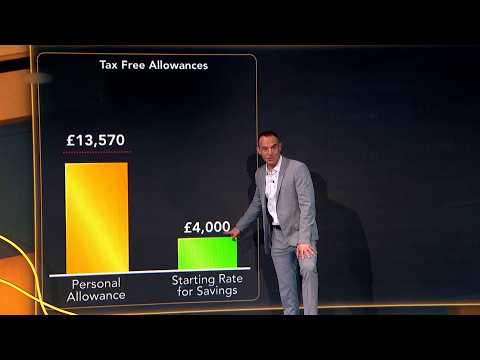

There's full info in our How savings tax works guide, but in brief these allowances are...
-
Personal Allowance: most can earn up to £12,570 tax-free. This is how much you can earn from any source (eg, work, pension, interest) before paying Income Tax. If your total earnings are less than that, then all your interest is tax-free.
-
Starting Rate for Savings: for those with low other (including work) earnings but bigger savings interest. This means some can earn up to £18,570 of earnings & interest combined without paying tax.
-
Personal Savings Allowance: you can earn up to £1,000 interest tax-free each year. This is on top of the allowances above – it's the amount of interest you can earn from ANY & ALL SAVINGS without paying tax on it.
- Basic 20% rate taxpayers can earn £1,000 interest a tax year.
- Higher 40% rate taxpayers can earn £500 interest a tax year.
- Top 45% rate taxpayers do not get a PSA.
Saving less than around £20,000? You likely won't pay tax. At today's top easy-access rates you'd need over £20,000 to generate £1,000 interest, so only basic-rate taxpayers with more would pay tax (for higher-rate taxpayers, it's half that). This, combined with cash ISAs below, means all but bigger savers or earners needn't pay any tax.
How you pay tax on savings if you need to. If you're sent a self-assessment tax form to do each year, you do it via that. If not, and your interest is under £10,000/year, you don't need to do anything – HMRC will simply change your tax code. If you get more than £10,000 interest, you'll need to do a tax return. See more on how to pay tax on savings interest.
2. You can save £20,000 tax-free each year in an ISA
Cash ISAs are just savings accounts where the interest:
- is never taxed
- doesn't have to be reported to HMRC
- doesn't count towards the interest in the allowances above (eg, the £1,000 PSA for basic-rate taxpayers doesn’t include cash ISA interest).
All this makes ISAs a crucial extra allowance – on top of the allowances above – which anyone who earns or saves enough to pay tax on savings interest (or thinks they may do in future) should take advantage of. You can save £20,000 in a cash ISA this tax year, though from April 2027 this limit is set to fall to £12,000 for under 65s (to 'encourage young people to invest').
Though if you both save and invest, a shares ISA's tax benefits can far outweigh a cash ISA.
3. Maxed your ISA? You can put £50k tax-free in Premium Bonds
Premium Bonds aren't worth it for most people, though they can be useful if you pay tax on savings & have used up your ISA allowance, provided you put in a larger amount. For a full explanation, see Are Premium Bonds worth it? and our Premium Bond Prediction Calculator.
Savings Q&A
What is the top account for joint savings?
This is a commonly asked question, but most savings accounts can be held by two people – so actually the question should just be: "What is the best savings account?", which this guide is set up to answer.
Except where noted, each of the accounts above can be set up as a joint account – so if you're looking to save with someone else, just head to our top easy-access accounts and top fixed-rate accounts.
Should I have my interest paid monthly or annually (or for fixed savings, at the end of the fix)?
For some accounts you can choose for interest to be paid out to an external account (for example, your bank account), while others pay the interest back into the account itself.
You can often choose how often interest is paid too, for example monthly or annually, or for a fixed-term account, even at the end of the fixed term (at maturity).
Your choice can have a significant impact, as it's when you can ACCESS the interest that matters for tax reasons, which is not necessarily the same time as when the bank pays interest.
Here's an example to help explain...
Imagine you save £10,000 in a five-year fix which pays 4.5%.
-
Option 1: Interest is paid out of the savings account to your bank account each year, meaning you can access it when it's paid.
Here, you'd earn £450 each year for five years. As you'd be earning less interest than the basic- and higher-rate personal savings allowance (PSA) limits (£1,000/year and £500/year respectively), you'd pay no tax on the interest.
After the five years, you'd have earned a total of £2,250. -
Option 2: Interest is paid back into the fixed account each year, and you can't access it till the account matures.
Here, you'd earn interest on your interest, meaning that after five years you'd have earned £2,460 – about £200 more than with the first option. However, because you can't access the interest until the end of the five-year fixed term, all the interest counts towards the fifth year's PSA, and far exceeds both the basic- and higher-rate limits. This means you'd have to pay tax – about £292 for basic-rate taxpayers, £784 for higher-rate.
This means that, overall, basic-rate taxpayers would be £80 worse off than with the first option, higher-rate taxpayers a massive £570 worse off.
When is it beneficial to choose monthly or annual interest?
So some may want to have interest paid out to a bank account monthly or annually, so it's spread out over multiple tax years. This can be a particularly good idea if your annual earnings are near an income tax band, where receiving a lump sum interest payment would push you up into a higher band. If this happened, two things happen simultaneously, which would mean you'd be significantly worse off...
-
Your PSA would plummet (from £1,000 to £500 if you moved from a basic-rate taxpayer to higher-rate, or from £500 to £0 if you moved from higher to additional). So you'll pay tax on much more of your interest.
-
The tax rate you do pay on (a portion of) your interest increases. It'll double from 20% to 40% if you move from a basic-rate taxpayer to a higher-rate, or from 40% to 45% if you moved from higher to additional).
However, there are times where it could be advantageous to have all your interest paid at the end of a fix, for example, if you're retiring and would then become a lower taxpayer when you receive the interest.
How do I know when my interest is accessible?
It's complex, so check with your savings provider about when you can access the cash, then call HM Revenue & Customs on 0300 200 3300 (call charges may apply) so it can help you declare the income for tax purposes in the right year, if you need to.
It's also a good idea to get independent tax advice, as there are so many variables and what you do and don't pay tax on will depend on other savings and income you have. See how to find a financial adviser.
What are online savings platforms?
Savings platforms offer accounts from various banks that they partner with – often at higher rates than are available direct with that bank. Essentially it's a way to easily switch between accounts, though rates are not always as good as those we've mentioned above. Big names include Raisin, Flagstone and Hargreaves Lansdown Active Savings, though recently we've seen decent rates from Meteor and Prosper, too.
Are my savings safe?
In short, yes. But how it works in practice is different for each savings platform. We've full info for all the platforms we feature in this guide: | | | .
If you take out a fix with a savings platform, you'll need to take action when it ends.
You'll be emailed before your fixed term ends asking what you want to do with the money. You can choose to get it paid back into your bank account or to open another product with the savings platform – remember, it won't necessarily offer the best rates at that point, so do check. Do nothing, and the money will usually go back to your "hub account" – so make sure you respond to the email or it'll be sitting earning zero interest.
What happens if things go wrong?
If you have any issues with your account, you need to contact the savings platform directly. You can contact all the providers we list by email, phone or secure messaging when logged in online. Raisin has links with about 40 banks, Hargreaves Lansdown has about 20, and Flagstone around 65. This means their offerings are not whole-of-market – so they won't always offer the top rates. Before you sign up to a new account through these platforms, check this guide to see if the rate can be beaten.
What are the top accounts via savings platforms?
Right now, we only link to market-leading accounts in our best buys. There's only one of these right now for a one-year fix:
-
Prosper via AlRayan Bank at 4.86% for one year – 4.6% underlying rate + 0.26% Prosper 'boost' (min £10k, max £1m).
Do you pay tax on introductory cash bonuses?
Cashback bonuses are not treated as savings interest income, so are not subject to the same tax. This means if you receive a cash bonus (eg, via a savings platform), it won't count towards your personal savings allowance, and if you've already exceeded your allowance or are an additional rate taxpayer, it won't be taxed.
How do I complain about my savings provider?
If your savings provider has given you the incorrect interest rate, or you haven't received your interest at all, then you don't have to suffer in silence. It's always worth trying to call your provider first to see if it can help, but if not... you can use free complaints tool Resolver.
The tool helps you manage your complaint, and if the company doesn't play ball, it also helps you escalate your complaint to the free Financial Ombudsman Service.
Can I open an account through Power of Attorney?
Not all providers will let you open a new account on another person's behalf through Power of Attorney. For those that do, in most cases, you will need to contact the provider's customer support line to open a new Power of Attorney account as well as provide relevant documentation.
We have listed below some providers who consistently appear on our savings guides who explicitly allow new accounts through Power of Attorney. Take a look at some of these providers and compare the rates to the ones in the tables above to get as close to a competitive rate as possible.
If you found an account you would like to open on someone else's behalf, try searching the FAQs for a specific Power of Attorney page or ring the provider's customer support line. Note that some providers have stipulations such as requiring sole signatories.
These providers DO let you open a new account through Power of Attorney:
For full information on registering a Power of Attorney with your bank, or opening new accounts on behalf of a donor, see our guide Which bank is best if you have Power of Attorney?
Do any current accounts pay interest?
Surprisingly, some banks' current accounts (or their linked savers) pay higher rates than many savings accounts, and the top ones can even match the top easy-access rates. Though you tend to only get the interest on smaller amounts, often the first £4,000 or so. And unlike savings accounts, you'll usually need to pass a credit check to open one a current account.
These used to be a lot more popular a few years ago, though there are still some decent options. See Best bank accounts for full info and options.
What are green savings? Are they any good?
Green savings do exist, though you'll usually need to accept a much lower rate of interest, so there's usually a trade-off between interest and green credentials.
As a MoneySaving website, the most important thing for us is rate, so we always include accounts with the highest interest rates in each category in this guide, regardless of which bank or building society offers them.
In some cases, the best buys can change several times a day, and we don't have the resources to forensically check each savings provider to see what it is (and isn't) invested in, or what lending it uses savings balances to fund.
Yet if green savings are important to you, we have a separate Green savings guide, where we do look at the banks and building societies that promise to help the environment or to use your savings to help fund green initiatives.
We also have a broader Ethical banking guide, which provides a good starting point if you're looking for an account that backs good causes, or at least avoids 'bad' ones
Are there savings accounts designed for my business?
If you have a business current account, the chances are it pays no (or very little) interest. So any businesses with cash stored, even just to pay the tax bill, are missing out on interest.
If you're a sole trader, you'll likely to be able to save the business's cash in a personal savings account. It's best to do this, as you get the best rates. But if you've a limited company, then you'll need to use a specially designed business savings account.
How do sharia-compliant accounts work?
Sharia accounts – in accordance with Islamic banking principles – prohibit interest. Instead, they give 'expected profit' rates which, by definition, mean returns aren't guaranteed – though we're not aware of any UK-based sharia banks that have failed to pay their expected rates in the past.
The accounts are open to anyone, of any faith, and the ones above are fully UK-regulated, meaning you get £120,000 per person, per institution savings safety protection. Sharia banks also follow a rule not to invest in areas such as gambling and alcohol.
How do inflation and deflation affect my savings?
To really know how well your savings are doing, you have to look at it compared to the rate of inflation. Inflation is the measure of the rate at which prices increase, so if savings don't beat inflation after tax, they're losing you money.
Are your savings 'losings'? (Spoiler: for many, yes)
A savings account that pays less than the rate of inflation is eroding your wealth. Big banks often pay no (or very little) interest on their standard savings accounts, which many linger on, thinking it's not worth the hassle of moving their savings elsewhere. In which case your savings are 'losings'.
Inflation has been volatile in recent years, though it's come down massively from the highs of 2021-2023, so it's now absolutely possible to find savings that beat inflation.
Here's an example using simple numbers of how inflation and interest interact...
-
Imagine inflation is 10%. Things costing £1 this year will then cost £1.10 next year.
-
You have £1 in a savings account at 5% interest. By next year, it will have grown to £1.05.
-
So, saving has reduced your spending power by 5p per £1. It's a 'losings' account, not a savings account.
What about deflation?
Of course, sometimes prices drop – as happened in 2009 – and you get negative inflation, known as deflation. This can sometimes be a positive for savers.
-
Imagine inflation is minus 2%. Things costing £1 this year will then cost 98p next year.
-
You have £1 in a savings account. The interest rate has fallen to 1%. Despite the lower rate, by next year your savings will have grown to £1.01.
-
So, saving has increased your spending power by 3p per £1. Even though the interest rate has plummeted, you're actually better off.
This has remarkable consequences. Far too many have a concrete savings mindset that shouts: "Don't spend your capital!" Yet in a deflationary environment that's too rigid, anyone living off savings interest would face huge cuts in their income, and not spending capital would actually be penalising yourself.
Personal rates of inflation do vary, yet if you're experiencing deflation and need to spend from your savings pot, you can do so without hurting your savings pile. Take the capital out at the rate of deflation and you're not losing anything, as your purchasing power is retained.
How do savings providers make money?
Deposited cash can provide banks with a variety of pathways for making money, including generating interest by holding reserves with the Bank of England, through partnerships and by offering loans at higher interest rates than those they give to savers. For more info, we've a full guide on How savings providers make money.
How much interest will I earn?
Use our nifty Savings Calculator to find out. Simply put in the rate, how much you'll save and how long for and it'll tell you how much you'll earn.
We also have a Regular Savings Calculator – it'll tell you how much you'll earn by drip-feeding into a top regular saver.
Share this guide?